.webp)

Without rigorous management of its cash flows, a company cannot function properly. With our guide "7 Actionable Tips for Business Leaders," implement the right practices to optimize your company's cash management. You'll be equipped to lead your business toward financial success and ensure its long-term health.
This useful document is built around 7 practical tips gathered in a cash management PDF. Far from being a simple course, this cash management PDF is aimed just as much at business leaders (small and mid-sized companies) as at business management master's students and entrepreneurs looking for concrete solutions.
It focuses on the building blocks of effective financial management: tracking cash flows, monitoring balance-sheet liabilities, planning, anticipating financing options, and much more. And the icing on the cake: this cash management PDF is free.
Cash Management – Definition
From an accounting standpoint, cash refers to all the financial resources a company has available at a given point in time. It represents the liquid funds available, whether held in cash or in the company's bank accounts.
Cash management is critically important for businesses. It allows you to monitor and control financial movements: money coming in and going out. Its goal is to ensure the liquidity needed to meet a company's financial obligations: paying suppliers, paying salaries, settling tax charges, repaying loans, and so on.
For businesses, effective cash management helps you:
- Plan, track, and control cash flows
- Minimize financial risk
- Ensure the liquidity needed and guarantee short-term financial stability
This requires proactive management, including collecting and centralizing financial information, analyzing cash balances, managing banking relationships, tracking receipts and payments, and setting up investment and financing strategies.
Tip #1 – Building a Routine: The Foundation of Effective Cash Management
Setting up a routine dedicated to cash management is essential to ensure regular, effective tracking of your cash flows.
In business, a good grasp of your financial position starts with a routine. Tracking cash inflows and outflows, balance-sheet liabilities, receivables, and debts gives you a detailed view. The cash management PDF outlines concrete actions to build this discipline into your organization.
Once a year: build your forecast budget
This step involves drawing up a forecast budget for the coming year, taking into account operating flows, investment flows, and financing flows. This means estimating revenue (cash inflows: receipts), expenses (cash outflows: disbursements), and upcoming investments. The forecast budget will serve as a benchmark for tracking the company's actual performance.
Once a week: update your bookkeeping (pre-accounting)
Each week, take the time to update your bookkeeping by recording financial transactions: invoices, payments, receipts, and expenses. This accounting practice gives you an accurate, real-time view of your financial position.
Once a month: run a report (comparing actuals to the monthly budget)
At the end of each month, run a report comparing actual results with the forecast budget. Analyze the variances. Once you've identified the reasons behind them, you'll be able to take the corrective action needed for the months ahead.
Once a quarter: update the budget (if needed)
At the end of each quarter, assess your forecast budget against the company's actual performance. Identify significant changes, new opportunities, or emerging risks. Update your forecast budget accordingly. This quarterly review lets you adjust your financial goals as your business evolves.
Tip #2 – Identify Your Cash Management Levers: Assets, Inventory, and Payment Terms
Adopting a cash culture, improving production times and the sales cycle, anticipating seasonal fluctuations, and rigorously tracking your cash position: these are the main levers for improving your company's cash flow.
The PDF explains how to adapt these levers to your organization, particularly by acting on:
Lever 1 – Build a Cash Culture and Mobilize Your Teams
- Raise your teams' awareness of cash management.
- Identify the day-to-day actions in each function that affect cash flow.
- Set measurable goals with clear indicators and track their progress.
Lever 2 – Improve Production Lead Times
- Analyze your inventory, determine the minimum levels needed, and reduce order and production lead times.
- Reduce storage time by improving inventory turnover to lower your working capital needs and improve your cash flow.
Lever 3 – Shorten Commercial Payment Terms
- Track your days sales outstanding (DSO) and days payable outstanding (DPO).
- Renegotiate payment terms with your business partners.
Lever 4 – Anticipate Seasonal Fluctuations
- Analyze how your working capital needs evolve with seasonality and economic conditions.
- Build up cash reserves during favorable periods to cope with fluctuations.
Lever 5 – Keep a Close Eye on Your Cash Position
- Set up detailed cash tracking, taking into account its current state, past variations, and future trends.
- Use cash management software with advanced features.
Tip #3 – Use Software to Automate Your Cash Management
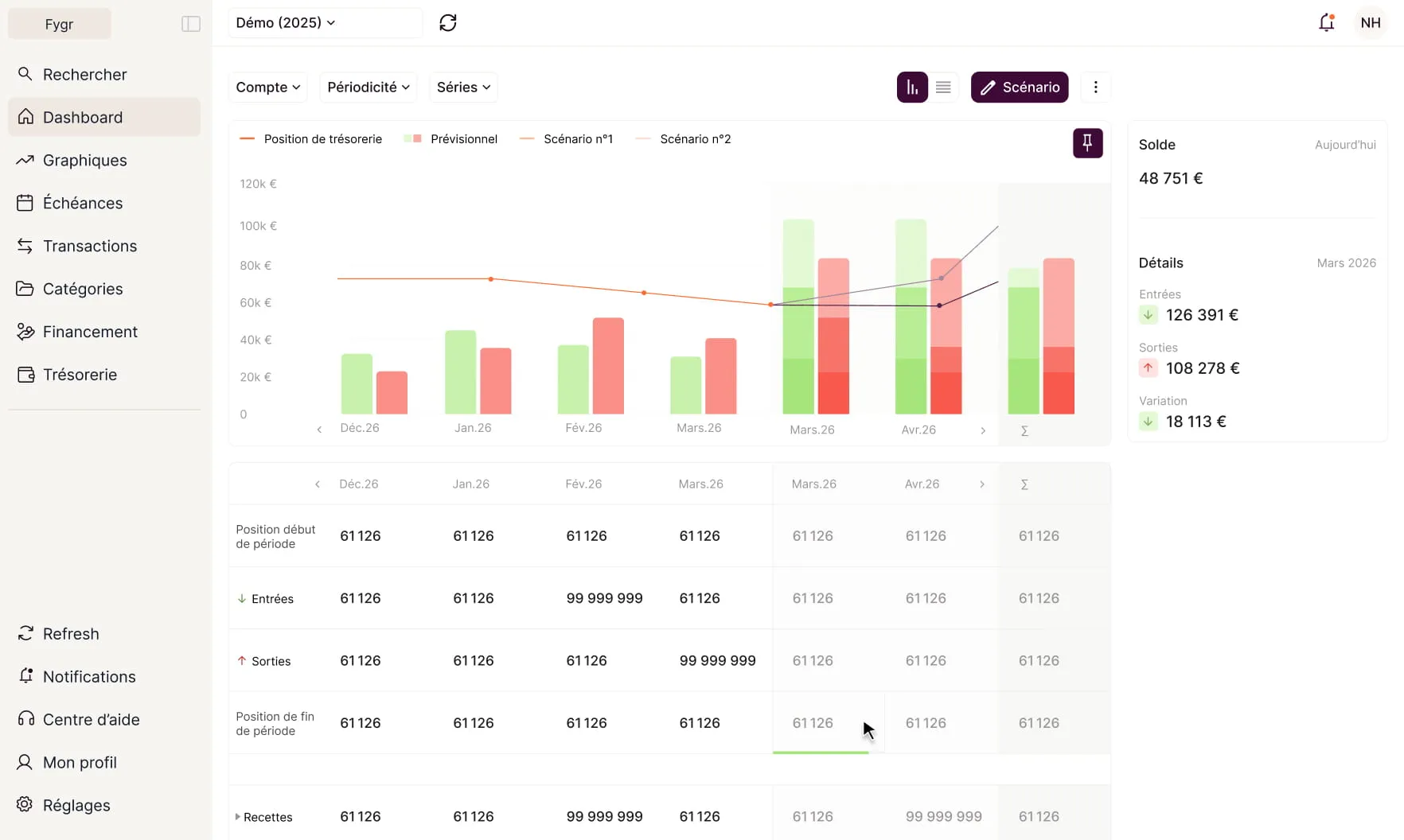
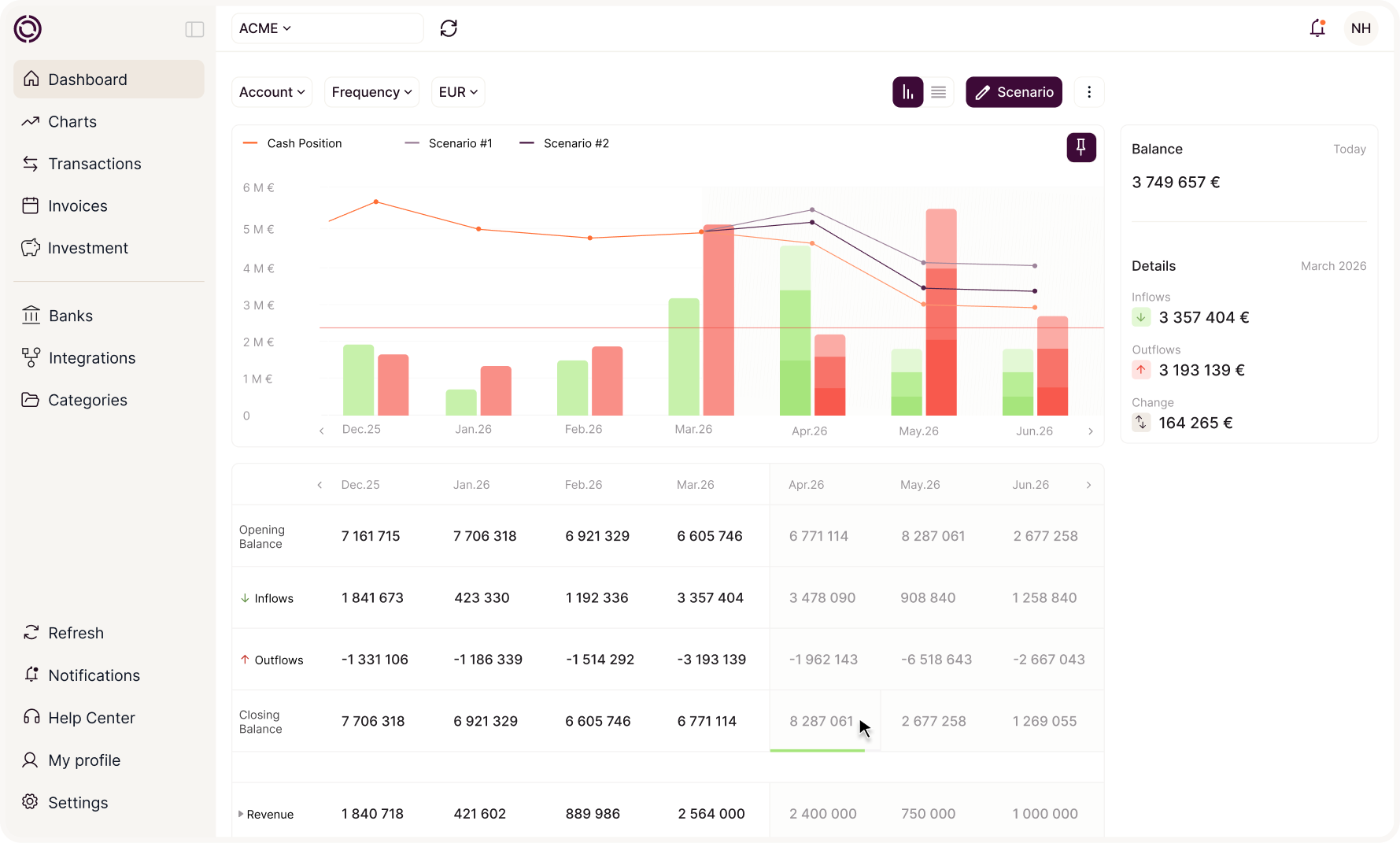
Using cash management software offers a wide range of benefits and is one of the pillars of modern cash management. Its purpose? To support you in tracking your company's finances. This tool lets you visualize your available liquidity (the cash the company has on hand). It helps you control inflows and outflows in your cash flow statement while managing financial risk. It also anticipates changes in cash position and working capital needs.
The PDF highlights the best tools available and the value they add. The main goal: making automation easier, improving data-entry reliability, and providing better real-time assessment.
Software with Advanced Features to Simplify Cash Management
With cash management software, you get the following features:
- An at-a-glance view of cash flows
- Automatic, real-time aggregation of banking data
- A dashboard customized to your business needs
- Real-time collaboration with other users
- Alerts for bank overdrafts or late client payments
- Pre-accounting management with automatic matching between invoices and bank transactions
Cash Management Software for More Accurate Forecasts
To project your business into the future, cash management software helps you:
- Automatically build forecast budgets based on your company's history
- Automatically compare forecasts to actuals via your bank connection
- Generate custom forecast scenarios
- Estimate your VAT balance, with automatic calculation of amounts collected and deductible
Software to Automate Time-Consuming Tasks
Synonymous with reliability and time savings, the automation features offered by your cash management software let you delegate low-value tasks and eliminate processing errors. The PDF emphasizes the importance of this automation, which includes:
- Automatic updates to your management indicators
- Analytical categorization of transactions
- Recognition of recurring flows (rent, salaries, subscriptions, loan repayments, etc.)
Tip #4 – Centralize and Automate Flows from Multiple Banks
Time savings, a global view, security: syncing all your banks within your cash management software offers undeniable benefits.
The PDF highlights that bank synchronization is a key lever for centralizing your flows and reducing operational friction.
A Genuine Time-Saver
When you sync your various banks with your cash management software, you access all your financial information from a single interface. You save valuable time: no more logging into each bank account to check balances and transaction statements.
A Complete View of Your Cash Position
By syncing all your banks, you can view balances, transactions, and movements across all your accounts at once. Aggregating your different bank accounts gives you an instant, consolidated view, making it easier to keep regular tabs on your cash position.
A Reliable, Secure Tool
Thanks to automatic synchronization and categorization of bank transactions, you can reliably check your cash balance. This helps consolidate your financial information and receive alerts in case of late payments or overdraft breaches. The PDF notes that these tools guarantee data confidentiality through the use of secure banking aggregators.
Automated Updates
Once your banks are synced with your software, transaction and balance updates happen automatically. You don't need to manually enter financial data, which reduces the risk of errors and duplicate entries.
Simplified Analysis and Reporting
Syncing all your banks with your cash management software makes analysis and report generation easier. You can obtain consolidated reports covering all your banking information. This reporting simplifies identifying financial trends, assessing profitability, and making decisions.
Tip #5 – Build an Accurate Cash Flow Forecast
The forecast cash flow plan is designed to anticipate your company's cash inflows and outflows over a given period. With this table, you monitor upcoming expenses and revenue, whether in the short or medium term.
The PDF guides you through building an accurate forecast budget, with an eye toward fine-tuned estimates. It also takes a hands-on, educational approach, illustrated with practical case studies to walk you through each step.
Why Build a Cash Flow Forecast?
Forecasting disbursements, anticipating risk, and managing seasonality in your business: these are the key strengths of a well-built forecast cash flow plan.
Optimize Your Cash Flow with a Clear Forecast and the Right Strategy
The forecast cash flow plan gives a clear view of the company's trajectory and enables strategic decisions based on concrete data. This forecast plan facilitates discussions between executives. It provides a solid communication foundation for employees and investors, helping to build trust and clarify company goals.
Cash Flow Forecast: Anticipating Risk for Proactive Management
The forecast cash flow plan helps anticipate risk by monitoring financial flows. It helps identify points of friction and build a survival plan in the event of a crisis. It also helps manage business seasonality and cope with potential swings in revenue and expenses.
How Do You Build a Cash Flow Forecast?
To build your cash flow forecast, you need to account for all of the company's receipts and disbursements.
On the receipts side, you'll need the following data:
- Forecast revenue
- Capital and current account contributions
- Financial income
- Grants
- Tax refunds
On the disbursements side, you'll need to include:
- Purchases (including tax)
- Overheads (including tax)
- Investments
- Salaries
- Taxes and duties
- Financial charges
- Capital reductions
- Withdrawals of current account contributions
Tools like Fygr can greatly simplify this process by letting you import financial flows, create custom forecasts, and compare actual cash flow against forecast cash flow.
Categorize Your Types of Income and Expenses
With Fygr, you can fully customize your category structure. By methodically organizing your financial flows, you'll get a clear picture of how your business generates revenue and spends its funds.
- For income (e.g., client invoices), you can classify by: client type, payment method, billing method, VAT rate.
- For expenses (e.g., supplier invoices), you can group by: supplier type, payment terms, type of service.
The PDF notes that this categorization step is essential for identifying potential savings and optimizing your margins.
Tip #6 – Build Scenarios to Anticipate Economic Shifts
Creating scenarios within your cash flow forecasts is valuable, as it helps you assess risk, anticipate cash flow variations, and test different strategies.
The PDF explains how to simulate various scenarios for your company's development:
- Reorganization, long-term investment, partial divestment
- Mergers and acquisitions
- Pessimistic, optimistic, or baseline simulations
- Operational trade-offs in response to unexpected events
Operational Trade-offs and Long-Term Strategy
Forecast scenarios let you explore different possible outcomes — a useful exercise for making the necessary operational trade-offs and defining the best long-term strategy.
Anticipating Cash Flow Variations
By building scenarios, you can forecast fluctuations in your cash position under different circumstances: periods of high demand, late client payments, cost variations, and so on.
Comparing Forecast Scenarios Against Each Other
By simulating multiple forecast scenarios, you can test different strategies and decisions before implementing them. Comparing scenarios gives you a better understanding of the consequences of each decision.
Comparing Scenarios Against Actual Cash Flow
Comparing scenarios with actual cash flow lets you assess the accuracy of your projections and improve your future planning.
Tip #7 – Compare and Adjust Your Financial Strategy
Comparing actuals to forecasts means putting the company's concrete results side by side with what you had planned. This gap between initial data and actual outcomes tells you whether your results match your forecast.
With the PDF, you'll learn how to compare your forecasts with what actually happened, in order to:
- Analyze the variances and their causes
- Identify points of friction
- Adjust your strategic decisions
- Continuously improve your company's overall performance
This information reveals the gaps between what was planned and what was done. It can be used to analyze your actual level of activity and take the necessary corrective action.
Conclusion – Download Your Cash Management PDF
Take your company's pulse by closely tracking your cash position.
With Okimia, a cash management and forecasting solution, automate the management of your flows in a single tool. Bring together all your banks and accounts on one platform.
By filling out our form, you'll immediately receive your free cash management PDF, containing the 7 essential tips to:
- Master your assets and fixed assets
- Optimize your financing options
- Anticipate economic shifts
- Structure your financial management
- Inspire your future business projects
A concrete, educational document suited to business leaders, master's students, M&A analysts, and sales management practitioners alike.
Discover Okimia
A complete platform to automate and optimize your cash management. Cash tracking, supplier payments, surplus cash investment: everything you need, in a single interface.