How to optimize cash management for a manufacturing business?
Manufacturing businesses have very specific cash management needs, which we'll break down in this article. We'll look at the best practices for tackling these challenges, and finally how cash management software like Okimia can help address them.

Manufacturing: the essentials on cash management
Cash management is a critical issue for manufacturing businesses, directly tied to their ability to fund long production cycles and heavy capital investment.
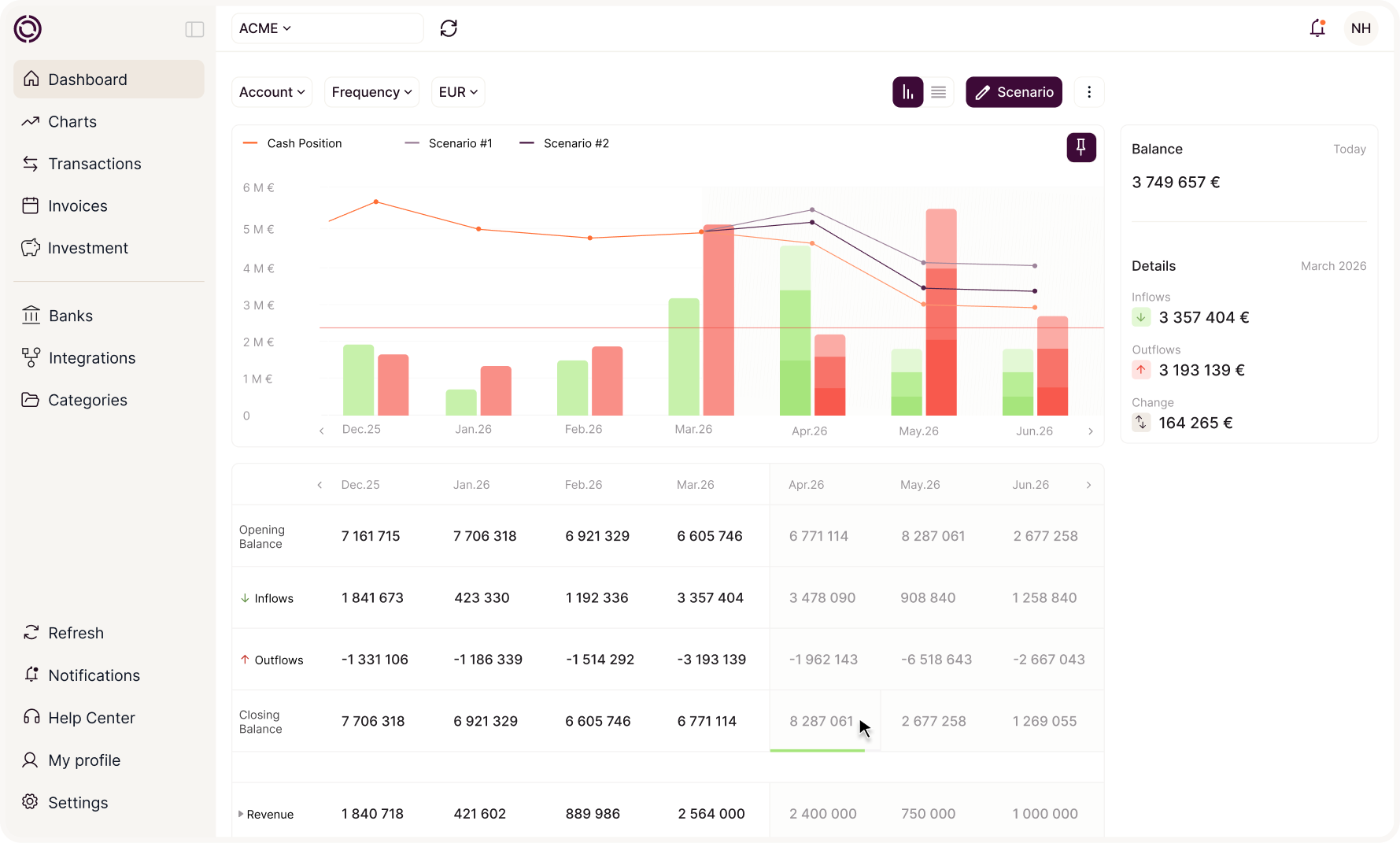
Okimia helps manufacturing businesses secure their cash flow and investments, providing a clear, consolidated, forward-looking view of financial flows.












The specific cash flow challenges manufacturing businesses face
Why is cash management particularly difficult for a manufacturing business? We've identified 3 major challenges.

Substantial investment and long production cycles
The manufacturing sector is defined by very heavy upfront investment, requiring substantial capital tied up in equipment, infrastructure, and technology.
These investments, often spanning multiple years, tie up significant financial resources for periods that can reach several years before generating a return.
The average length of production cycles, ranging from three to six months, amplifies this pressure on cash flow, forcing manufacturing businesses to maintain substantial financial reserves to absorb these timing gaps.

Raw material cost volatility
Manufacturing is particularly exposed to sharp swings in raw material prices, which can directly and significantly affect profitability.
These swings, often tied to complex geopolitical or economic conditions, create constant uncertainty around production costs.
Manufacturing businesses have to continuously anticipate, absorb, and pass on these variations, which requires particularly strong financial agility and strategic forecasting ability.

Client payment terms and tied-up inventory
Manufacturing businesses face particularly extended client payment terms, generally between 60 and 90 days, combined with long inventory turnover that can reach 45 to 90 days depending on the sub-sector.
This double constraint creates very substantial working capital needs, tying up a significant share of cash.
Managing this inventory, financing it, and waiting for client payments represent a constant financial management challenge, requiring complex forecasting and anticipation skills.
Best practices for cash management at a manufacturing business
A few days is all it takes to automate your cash management
01.
02.
03.
Master investment and production cycles
In manufacturing, managing capital investment is a major strategic issue. Businesses need to take a proactive approach to planning production and investment cycles, precisely anticipating medium- and long-term financing needs.
This strategy requires a detailed analysis of equipment depreciation periods, a rigorous assessment of return on investment, and precise projection of the financial flows generated by each investment.
A deep understanding of these mechanisms helps precisely calibrate the financial resources needed, minimizing the risk of cash flow pressure and optimizing resource allocation across different industrial projects.
Optimize multi-site financial flows
Manufacturing businesses, often organized across multiple production sites, need to develop a consolidated, dynamic view of their financial flows. This requires setting up standardized financial reporting processes, allowing precise traceability of inter-plant transactions and an instant view of overall performance. The goal is to create fast, reliable information-gathering mechanisms that let finance leadership manage each site's performance in real time and make strategic trade-offs. This centralization of financial data also makes it easier to detect risks early and identify operational optimization levers.
Secure supply and inventory management
Managing supply is a crucial lever of financial performance for manufacturing businesses. It becomes essential to develop advanced negotiation strategies with suppliers, securing supply while controlling costs. This means carefully analyzing raw material price variations, setting up flexible contracts, and building strategic inventory without tying up too much capital. The goal is to strike an optimal balance between production continuity, protection against market fluctuations, and preserving financial liquidity. Constant monitoring of raw material markets and the ability to adapt quickly become major competitive advantages.

Ready to optimize your cash flow?
Discover how Okimia can transform your financial management starting today.
Why use Okimia for a manufacturing business?
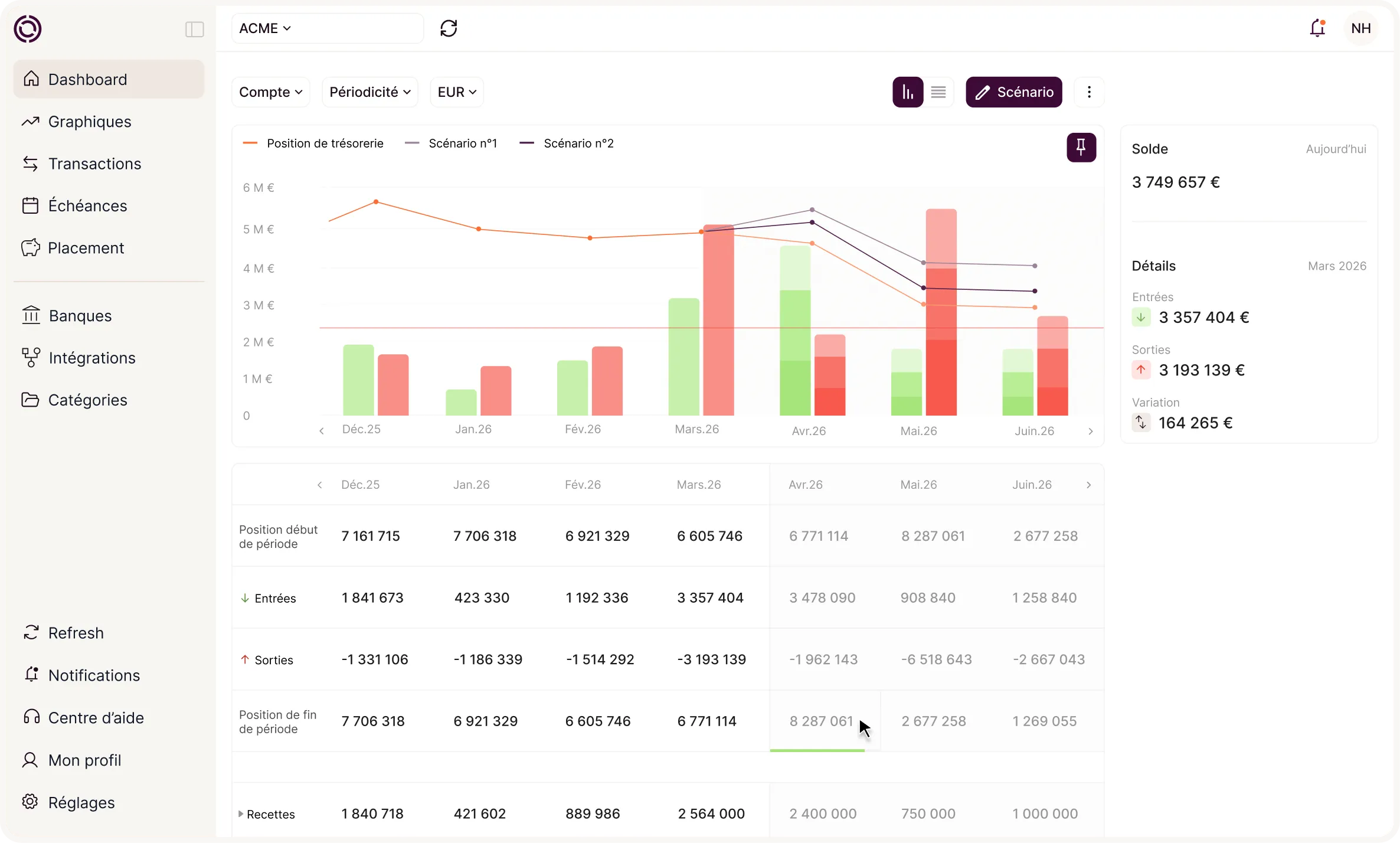
The solution for optimizing your cash management: use software designed for the job, like Okimia. Okimia already supports many manufacturing businesses in their day-to-day cash management. Let's look in detail below at how cash management software like Okimia can help a manufacturing business manage its cash flow at its best.
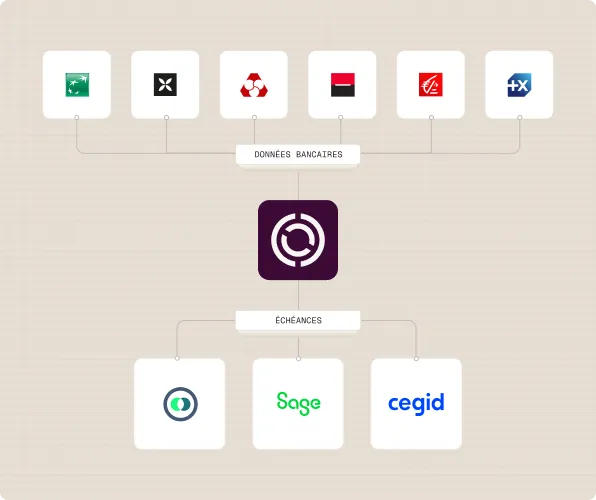
Automatic bank synchronization
Centralize and optimize your multi-site industrial financial flows
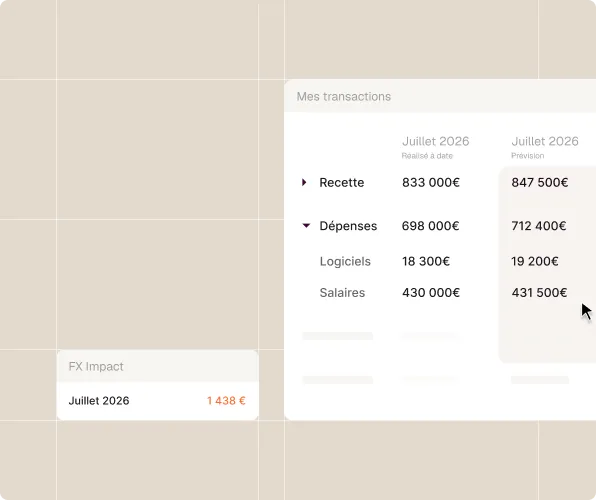
Cash flow forecasting
Build a forecast for all your company's indicators so you know what to expect
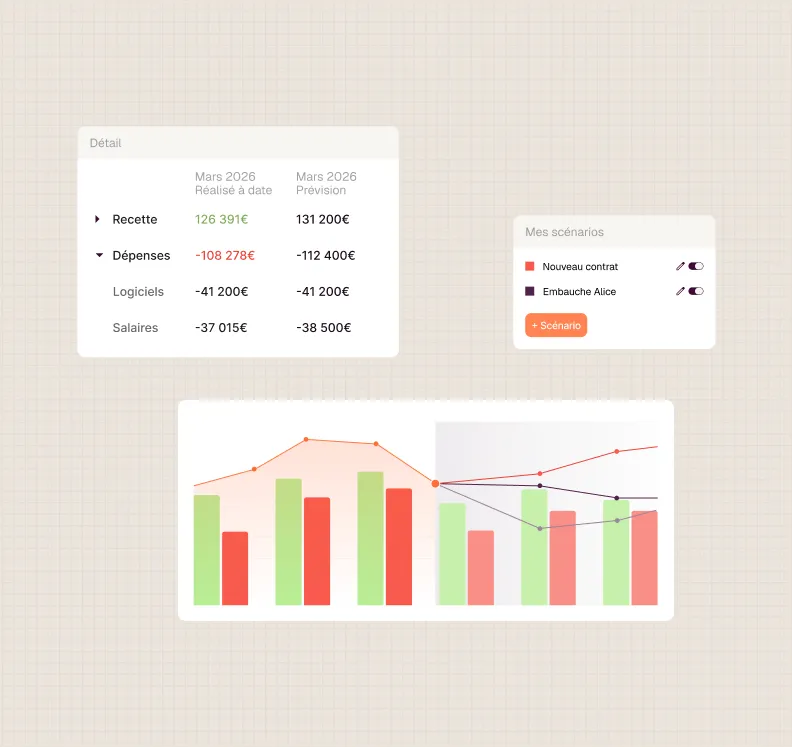
Forecast-vs-actual comparative analysis
Track and optimize your financial performance in real time
They chose Okimia
Here's what some of our clients say after choosing Okimia to visualize their financial data:

A big thank you to Alexia for her kindness, energy, and expertise! In just two calls, everything was perfectly configured! The tool is both simple and incredibly effective. It now helps me anticipate and pushes me to take action thanks to a clear view of the months ahead. The scenarios let me explore all my ideas and, in one click, compare the results. It's a real game-changer for my organization. I love it!

Fabien Mourioux
OKIMIA is an excellent tool for precise daily tracking of your figures (cash/inflows/outflows/forecast). Thanks to expense categorization, you can very easily forecast outflows, including automatically, over several years. The support team is very responsive and attentive — thank you to them. The solution is stable, easy to use, and flawless. It's ideal for building your budget. Every exceptional expense is tested for feasibility, and sales targets can be set if needed. As a result, I sleep soundly (or I party instead of doing accounting!) Bravo and thank you!

Simon Giron
Great software, very intuitive! Quick setup. A big improvement in managing our cash flow. The OKIMIA teams are quickly available and very friendly. Top notch — congratulations!

Quentin Le Jannou


We're here to help

Have more questions?
Don't hesitate to contact our teams.
How do I choose cash management software for an industrial company?
To choose the right industrial cash management software, start by identifying your specific needs: inter-plant transaction volume, number of production sites, complexity of financial flows. Prioritise software offering features adapted to long investment cycles.
What are the advantages of cash management software over Excel for an industrial company?
A cash management tool offers complete automation of complex processes, significantly reducing calculation errors and processing time. Unlike Excel, it enables real-time synchronisation of multi-site data, dynamic projection of investment cycles, and precise comparative analysis between forecast and actual.
How do I build reliable cash flow forecasts in the industrial sector?
For reliable forecasts, collect precise historical data on production cycles, equipment investments, and raw material cost volatility. Analyse your cash cycles taking into account the seasonality specific to your industrial sub-sector. Factor in all recurring costs, equipment depreciation, and medium-term investment prospects. Use multiple scenarios accounting for potential variations in raw material prices.
How long does it take to implement cash management software for an industrial company?
Implementation varies depending on the complexity of your industrial organisation, typically from a few weeks to a few months. Timing depends on the number of production sites, the diversity of financial flows, and the need to integrate complex historical data. Good industrial software should enable progressive implementation, with gradual synchronisation of different sites and existing computer systems.
How much does cash management software cost for an industrial company?
Prices vary significantly depending on the size and complexity of the industrial organisation. Prices at Okimia start at €69 per month per entity and bank account. It is crucial to consider the return on investment, particularly in terms of productivity gains, financial optimisation, and risk reduction.
Who are the competitors in the industrial cash management software market?
Okimia's main competitor in the cash management market is Agicap. Agicap is recognised as sometimes offering overly complex features. Some Okimia customers mention the 'overcomplicated' side of the solution. Prices are significantly higher at Agicap than at Okimia.
How do I know if my industrial company needs cash management software?
Your company needs such software if you face difficulties forecasting your financial situation in the medium term, if manual flow management between several sites is becoming complex, if you are experiencing significant production cost volatility, or if you lack visibility on your investment cycles.
What are the essential features for industrial cash management?
Key features include multi-site bank synchronisation, dynamic forecasts integrating long investment cycles, fixed asset tracking, raw material variation management, industry-specific dashboards, financial risk alerts, and the ability to simulate macroeconomic impacts.
Request a demo
30 minutes with a specialist who will set up Okimia for your business. They will answer all your questions and show you the product in real-world conditions.
Free trial
Create your account and connect your banks in 5 minutes. 7 days free to explore Okimia at your own pace, no commitment.