Cash management for retailers: 3 best practices for 2026
Retailers face cash flow swings of 40 to 60% depending on the season. At Okimia, we help more than 3,000 SMEs optimize their financial management. By analyzing the cash flows of our retail clients, here are 3 best practices.

Retailers: the essentials on cash management
Retailers face cash flow swings of 40 to 60% depending on the season. By analyzing the cash flows of Okimia users, here are the key takeaways:












The specific cash flow challenges retailers face
Why is cash management particularly difficult for retail businesses? We've identified 3 major challenges.

Extreme seasonal volatility
The retail sector experiences particularly sharp revenue swings, with periods of hyper-activity like sales events or the holiday season, alternating with near-total lulls.
These swings put constant pressure on cash flow, forcing retailers to finance large inventory purchases ahead of peak periods, with no guarantee they'll sell through it all.
The ability to get through these cycles becomes a matter of survival, requiring surgical precision in financial management.

Fast inventory depreciation
Retailers operate in an environment where the value of goods declines quickly, requiring extremely fast inventory turnover.
Every unproductive day represents a potential cost, between tied-up capital, the risk of depreciation, and fixed costs.
The constant shift in consumer trends amplifies this pressure, forcing businesses to continually anticipate future demand while minimizing the financial risk of unsold stock.

Multiple sales channels
The proliferation of sales channels (physical stores, online marketplaces, e-commerce sites, social media) makes tracking financial flows considerably more complex.
Each channel comes with its own payment timelines, commissions, and accounting quirks, making the overall financial picture hard to read.
This fragmentation of revenue prevents a consolidated, real-time view of the financial situation, drastically limiting retailers' ability to steer their strategy.
Best practices for optimal cash management as a retailer
01.
02.
03.
Precisely manage the seasonality of your business
Retailers experience particularly pronounced swings in activity, with peaks during sales events or the holiday season, and much quieter periods the rest of the year. Effective cash management means building financial reserves during strong periods, to comfortably absorb slower phases. This approach requires careful analysis of your historical sales cycles, allowing you to precisely anticipate the financing needs tied to inventory purchases ahead of each key period, while avoiding tying up excessive cash.
Centralize flows from your different sales channels
Physical store, e-commerce site, marketplaces: each channel generates its own financial flows, with its own payment timelines and commissions. Automatically centralizing these flows gives you a consolidated, real-time view of your cash position, rather than a fragmented, delayed picture. This centralization also makes it easier to identify your most profitable channels, allowing you to adjust your sales strategy and marketing investment based on each point of sale's actual performance.
Optimize inventory turnover and supply
Fast inventory turnover is at the heart of a retail business's financial health: every day a product goes unsold represents a cost, between tied-up capital and the risk of depreciation. Good practice is to regularly analyze your best-performing products, adjust orders accordingly, and negotiate payment terms with suppliers that align with your own sales cycles. This optimization helps limit working capital needs while ensuring enough inventory to meet demand.

Ready to optimize your cash flow?
Discover how Okimia.com can transform your financial management starting today.
Why use Okimia as a retailer?
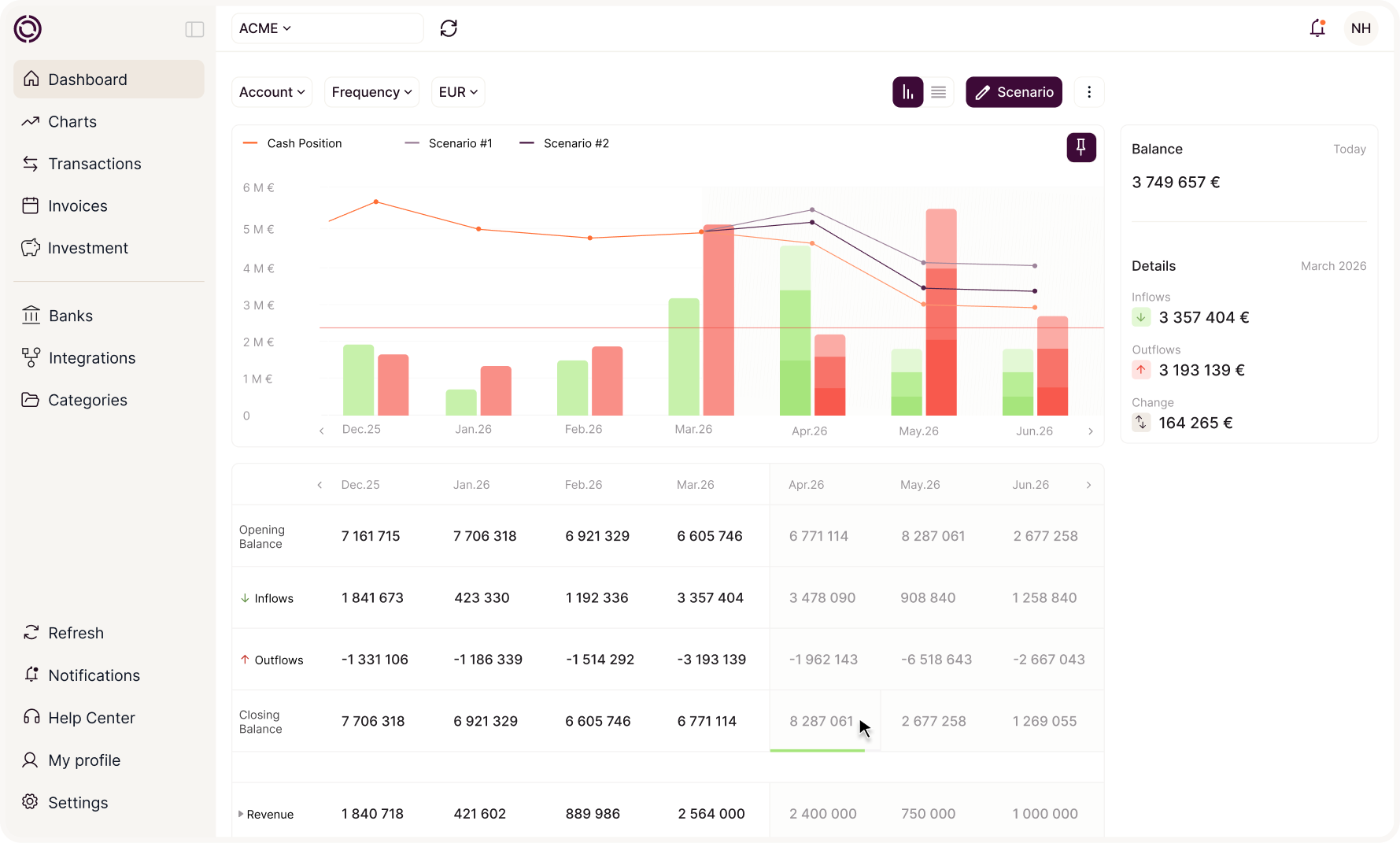
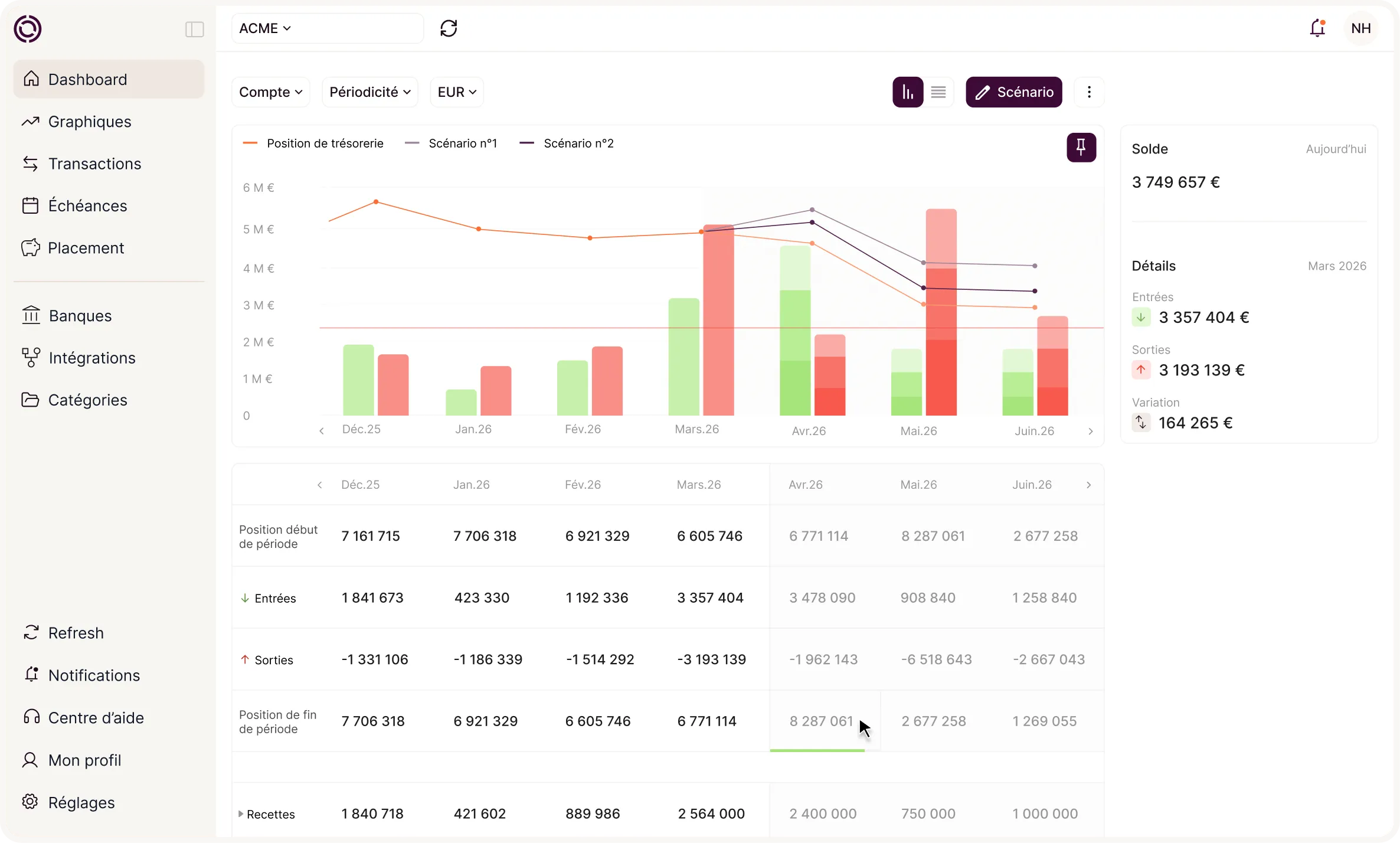
There's one solution for putting all these best practices into place: Okimia. It's cash management software perfectly suited to all types of retailers. Find out below how software like Okimia could help power up your business's cash management.
Multi-channel bank synchronization
Centralize the financial flows from all your points of sale

Tailored cash flow forecasting
Anticipate your financing needs tied to seasonal peaks and inventory purchases
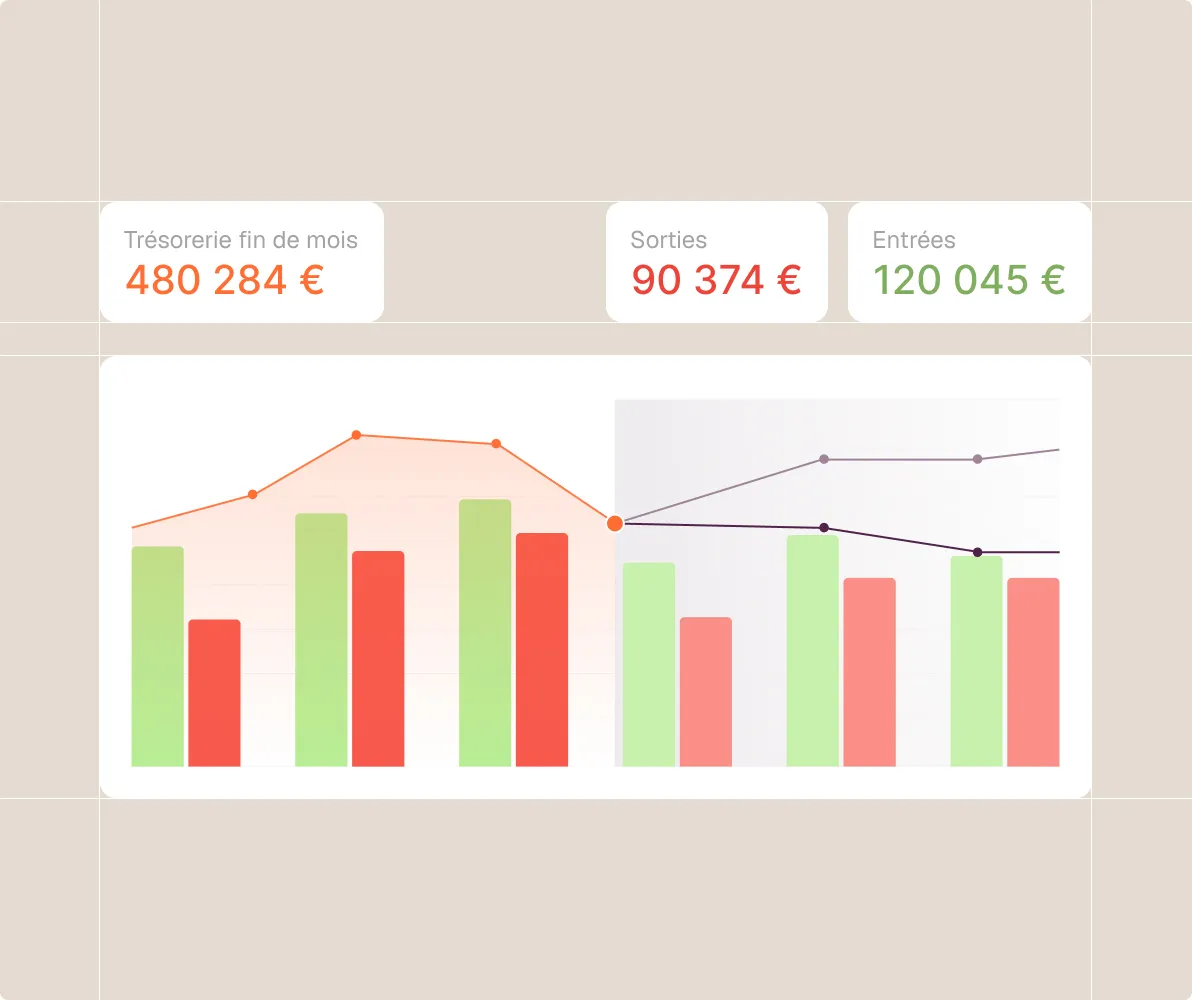
Forecast-vs-actual comparative analysis
Adjust your sales strategy based on the gaps you observe
They chose Okimia
Here's what some of our clients say after choosing Okimia to visualize their financial data:
Nous n’avons trouvé aucun élément pour cette collection.


We're here to help

Have more questions?
Don't hesitate to contact our teams.
How do I choose cash management software for a retail business?
To choose the right cash management software, start by identifying your specific needs: multi-channel transaction volume, number of points of sale, required integrations. Prioritise software with an intuitive interface and features adapted to fast stock turnover and seasonal variations. Check compatibility with your sales tools and ensure customer support understands the specifics of the retail sector.
What are the advantages of cash management software over Excel for a retailer?
A cash management tool offers automation of retail-specific processes, significantly reducing margin tracking errors. Unlike Excel, it enables real-time updating of sales data, automated dashboards by point of sale, and a consolidated view of your multi-channel collections. Backups are automatic and secure, with precise synchronisation of banking and sales data.
How do I build reliable cash flow forecasts for a retail business?
For reliable forecasts, collect precise historical data covering at least 12 months, incorporating the seasonality specific to your sector. Analyse your cash cycles taking into account stock variations, sale periods, and supplier/customer payment delays. Factor in all recurring commitments and anticipate stock replenishment needs. Use scenarios adapted to market variations and update your forecasts regularly based on actual performance.
How long does it take to implement cash management software for a retail business?
Implementation varies depending on the complexity of your commercial organisation (from a few hours to a few weeks). Timing depends on the number of points of sale, sales channels, and interfaces to integrate. Okimia enables rapid implementation while accounting for the potential complexity of your commercial model.
How do I know if my retail business needs cash management software?
Your retail business needs cash management software if you face: difficulties forecasting your cash flow during critical periods, significant time spent on Excel spreadsheets, lack of visibility on margins by product family, or significant growth requiring more precise financial management.
How do I measure the ROI of cash management software for a retail business?
ROI is measured by comparing the software cost to the benefits generated: time saved on administrative tasks (5–10 hours per month), stock optimisation, reduction of financial immobilisation, improved payment delays, and better supplier negotiation thanks to precise financial visibility.
What are the essential features of cash management software for a retail business?
Essential features include multi-channel bank synchronisation, cash flow forecasts adapted to seasonal variations, margin tracking by product family, dashboards by point of sale, and detailed financial analysis reports.
What's the difference between cash management software and accounting software for a retailer?
Accounting software focuses on recording past operations, while cash management software offers a forward-looking, operational view. It enables fine analysis of financial flows, stock, and performance by point of sale, where traditional accounting provides a retrospective and legal view.
How much does cash management software cost for a retail business?
At Okimia, prices start at €69 per entity and connected bank account. Pricing is adapted to retail specifics, with particular attention to the needs of small and medium-sized retailers.
Does cash management software handle invoice tracking?
Yes, Okimia handles supplier and customer invoice tracking, with integrations with the main invoicing and commercial management software. The software allows invoices to be imported directly and integrated into your cash flow forecasts.
Who are Okimia's competitors and which should I choose?
Okimia's main competitor is Agicap. Agicap is a recognised treasury software but more expensive and often more complex. Okimia positions itself as a solution better suited to medium-sized retailers, offering ease of use and a fine understanding of sector-specific issues.
Request a demo
30 minutes with a specialist who will set up Okimia for your business. They will answer all your questions and show you the product in real-world conditions.
Free trial
Create your account and connect your banks in 5 minutes. 7 days free to explore Okimia at your own pace, no commitment.