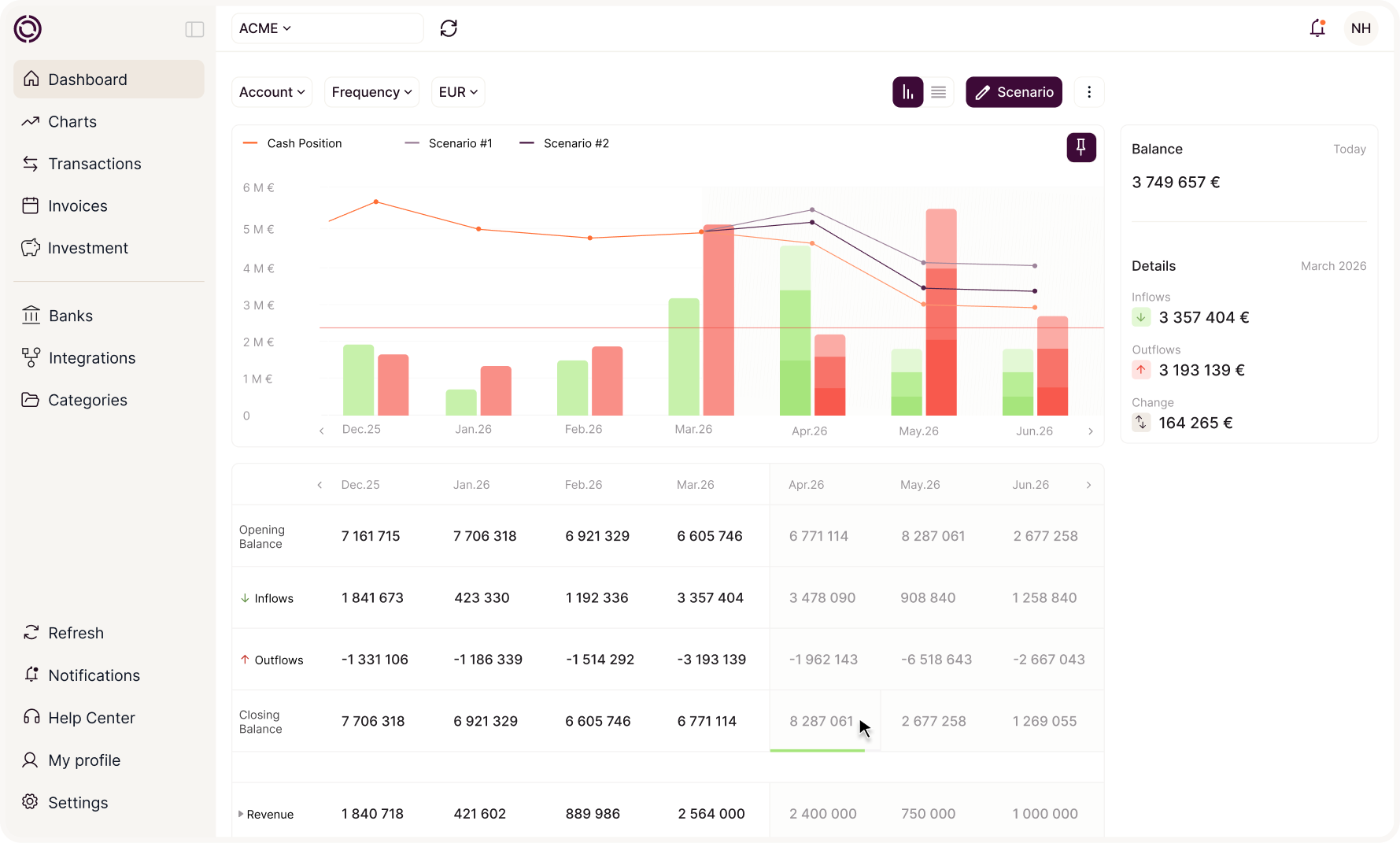
How to optimize cash management for tradespeople
Tradespeople face specific challenges when it comes to cash management. Discover the best practices to adopt to address cash flow issues, and how a tool like Okimia can meet all your needs.

Tradespeople: the essentials on cash management
Cash management is a critical issue for tradespeople, directly tied to the survival and growth of the business. The pressure comes from structural imbalances between activity, cash inflows, and costs:
Okimia helps tradespeople take back control of their cash flow without complexity, through centralized financial flows, automatic projections, and clear visibility into their financial future.












The specific cash flow challenges tradespeople face
Why is cash management particularly difficult for tradespeople? We've identified 3 major challenges.
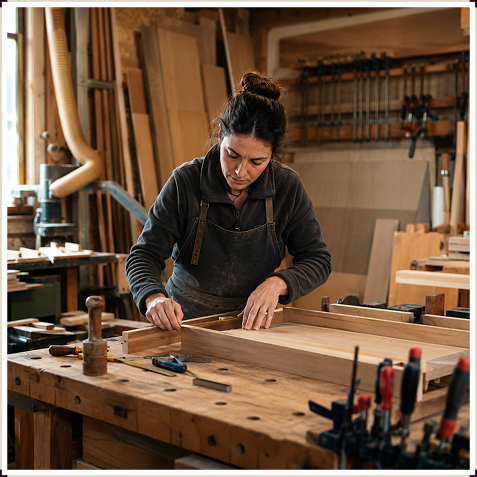
Revenue variability
The trades sector is defined by extreme revenue volatility, directly tied to the nature of the work itself.
Unlike standardized service businesses, a tradesperson's financial resources fluctuate constantly based on orders, the season, and local economic conditions. These swings can be sharp: one month might bring in several thousand euros in revenue, while the next could be nearly empty, with no significant income.
This irregularity makes forecasting particularly difficult and exposes trade businesses to constant cash flow risk.

A critical gap between completing work and getting paid
Tradespeople face a structural gap between completing a job and actually being paid for it.A project can require weeks of intense work, with significant direct costs (materials, travel, labor), with no guarantee of immediate payment. Payment terms, often long and inconsistent, create constant financial pressure, forcing the tradesperson to advance significant funds before being able to recover them.
This dynamic is especially risky for small businesses that don't have substantial financial reserves to absorb these timing gaps.
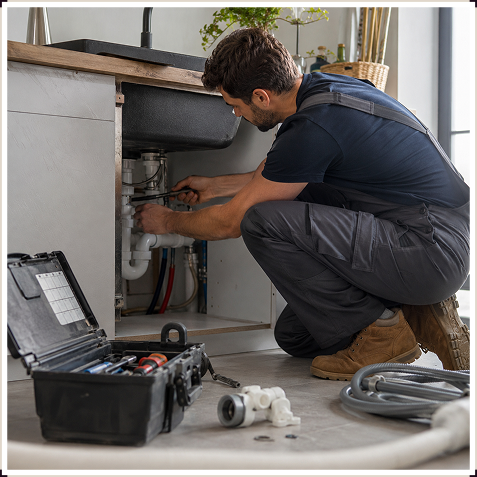
Overlapping financial obligations and unavoidable fixed costs
Tradespeople constantly have to juggle the roles of technician, salesperson, and manager, all while shouldering a set of fixed costs on their own that don't depend on their level of activity: social security contributions, professional insurance, equipment leasing, workshop rent.
These financial obligations pile up regardless of incoming cash, creating constant pressure on cash flow, particularly during slow periods or when several projects experience payment delays at the same time.
This buildup of unavoidable costs, combined with the limited time a tradesperson can devote to the administrative and financial management of their business, considerably complicates their ability to anticipate and absorb cash flow pressure.
Best practices for optimal cash management as a tradesperson
A few days is all it takes to automate your cash management
01.
02.
03.
Anticipate and plan for seasonal financial cycles
In the trades, financial management relies on a deep understanding of seasonal activity swings. Every trade has its slow periods and its high-demand moments, both of which directly affect cash flow. A high-performing tradesperson needs to develop a forward-looking view of their business, precisely identifying potential moments of financial pressure. This proactive approach means building up financial reserves during strong periods, diversifying revenue sources, and scheduling investments and expenses based on projected cash flow. The key lies in careful planning that turns seasonal uncertainty into a strategic opportunity.
Rigorous control of the quoting-to-payment cycle
A trade business's financial health depends heavily on its ability to manage the invoicing and collections process effectively. It's essential to put in place strict procedures around issuing quotes, getting them approved, invoicing promptly, and tracking payments. This means clear communication with clients about payment terms, structured and systematic follow-ups when payments are late, and regular analysis of payment delays. The goal is to minimize the gap between completing the work and getting paid, reducing the risk of unpaid invoices and smoothing the financial cycle.
Separating and optimizing personal and business finances
Tradespeople, who often blur the line between personal and professional life, absolutely need to clarify their financial flows. Setting up a bank account dedicated exclusively to the business makes things clearer and more efficient. This separation allows for precise tracking of performance indicators, simplifies bookkeeping, and makes tax filing easier. It then becomes possible to clearly distinguish business expenses, categorize costs, and get a transparent view of the business's actual profitability. This approach helps professionalize management and turns the tradesperson into a true strategic business owner.

Ready to optimize your cash flow?
Discover how Okimia can transform your financial management starting today.
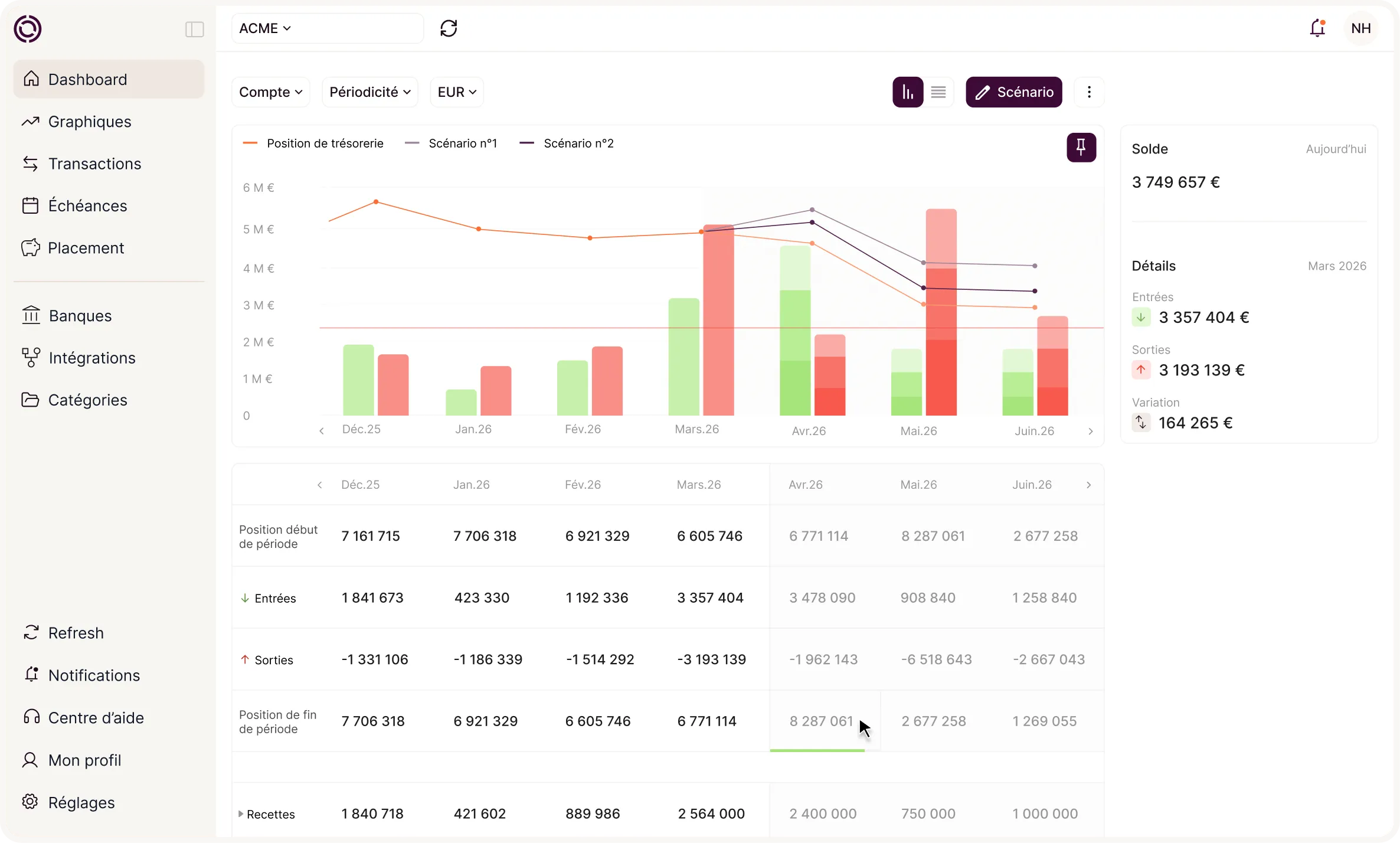
Why use Okimia as a tradesperson?
There's one solution for putting all these best practices into place: Okimia. It's cash management software perfectly suited to all types of tradespeople. Find out below how software like Okimia could help power up your business's cash management.
Financial management for tradespeople
Centralize your financial flows and keep full traceability of your projects

Complete financial visibility
Confidently anticipate your trade business's financial cycles
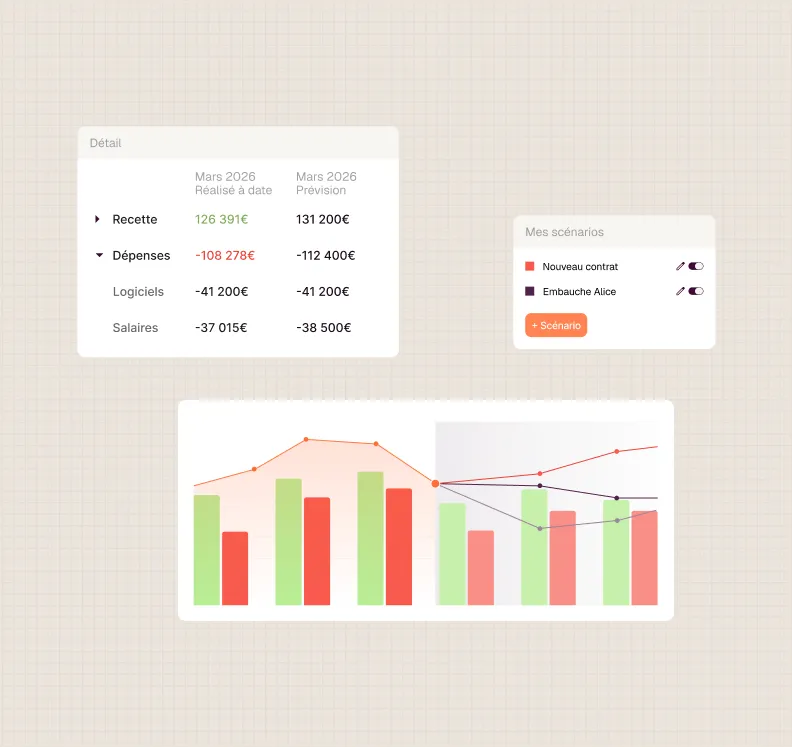
Forecast-vs-actual comparative analysis
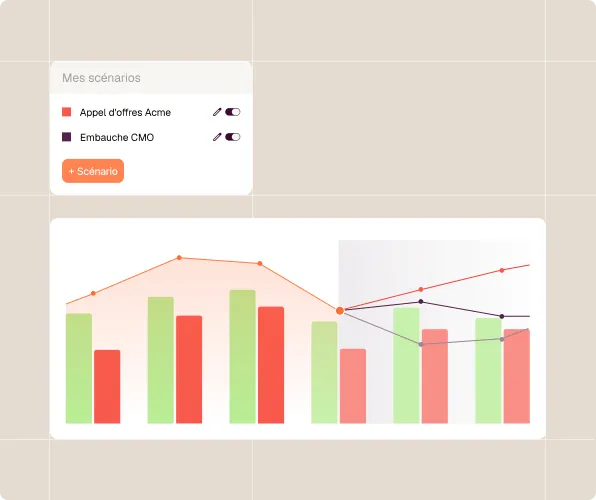
Turn your data into performance levers
They chose Okimia
Here's what some of our clients say after choosing Okimia to visualize their financial data:

Great tool and great team always available at the slightest question — if you're looking for a tool for your cash flow forecasting, go for it!! 😇

Ozlem Yilmaz
OKIMIA is an excellent tool for precise daily tracking of your figures (cash/inflows/outflows/forecast). Thanks to expense categorization, you can very easily forecast outflows, including automatically, over several years. The support team is very responsive and attentive — thank you to them. The solution is stable, easy to use, and flawless. It's ideal for building your budget. Every exceptional expense is tested for feasibility, and sales targets can be set if needed. As a result, I sleep soundly (or I party instead of doing accounting!) Bravo and thank you!

Simon Giron
Okimia can help you better control your expenses and manage them over time, because you have a global and long-range view of your cash flow. It doesn't happen by itself, but I must admit that Okimia is very comprehensive and provides a significant time saving.

Dany Fernandez


We're here to help

Have more questions?
Don't hesitate to contact our teams.
What's the difference from accounting software for a tradesperson?
Accounting software records past operations, while cash management software offers a forward-looking, operational view. For a tradesperson, this means being able to anticipate financial needs, optimise margins, and transform administrative management into a genuine strategic tool.
What are the essential features for a tradesperson?
Key features include bank synchronisation, cash flow forecasts tailored to trades cycles, quote and invoice tracking, project dashboards, alerts for critical periods, deposit management, and dynamic social contribution estimates. Integration with specialist invoicing software is also important.
How do I measure ROI for a tradesperson?
ROI is measured by comparing the software cost to the benefits: time saved on administrative tasks (5–10 hours per month), reduction in overdrafts, improvement in project margins, and better anticipation of critical periods. A positive ROI is generally achieved within a few weeks.
How do I know if my trade business needs cash management software?
Your business needs such a tool if you face: difficulties forecasting your cash flow, significant time spent on Excel spreadsheets, lack of visibility on project margins, issues managing deposits and retention payments, or business growth. This is particularly relevant if your annual revenue exceeds €100K.
How much does cash management software cost for a tradesperson?
At Okimia, prices start at €69 per entity and connected bank account. The solution is designed to be accessible to tradespeople, with a particularly attractive value for money. The cost should be seen as an investment in professionalising your financial management.
Who are Okimia's competitors and which should I choose as a tradesperson?
Okimia's main competitor is Agicap. However, Okimia stands out for its ease of use and adaptability to trades-specific needs. Tradespeople particularly appreciate the intuitive interface and features dedicated to small structures, unlike more complex and expensive solutions.
How long does it take to implement cash management software for a tradesperson?
Implementation varies depending on the complexity of your activity, typically from a few hours to a few weeks. Timing depends on the number of accounts to sync, the diversity of your projects, and your management habits. Okimia offers quick integration, tailored to the constraints of tradespeople, with personalised support for easy onboarding.
How do I build reliable cash flow forecasts for a tradesperson?
For precise forecasts, collect your historical data covering at least 12 months, taking into account the seasonality specific to your trade. Analyse your billing cycles, factor in your fixed costs (social contributions, investments), and your predictable income. Build scenarios accounting for trades-specific factors: quiet periods, order variations, equipment investments. Update your forecasts regularly based on actual performance.
What are the advantages of cash management software over Excel for a tradesperson?
A cash management tool offers complete automation of processes, significantly reducing data entry errors and administrative management time. Unlike Excel, it enables precise tracking of margins by project, automatic bank synchronisation, and dashboards tailored to trades-specific needs. Backups are secure and banking data is updated in real time.
How do I choose cash management software as a tradesperson?
To choose the right software, start by identifying your specific needs: project management, quote tracking, investment projection. Prioritise a tool with a simple interface and features tailored to trades. Check compatibility with your existing tools and ensure support understands the particularities of your sector. Okimia can be a relevant solution for tradespeople looking to professionalise their financial management.
Request a demo
30 minutes with a specialist who will set up Okimia for your business. They will answer all your questions and show you the product in real-world conditions.
Free trial
Create your account and connect your banks in 5 minutes. 7 days free to explore Okimia at your own pace, no commitment.