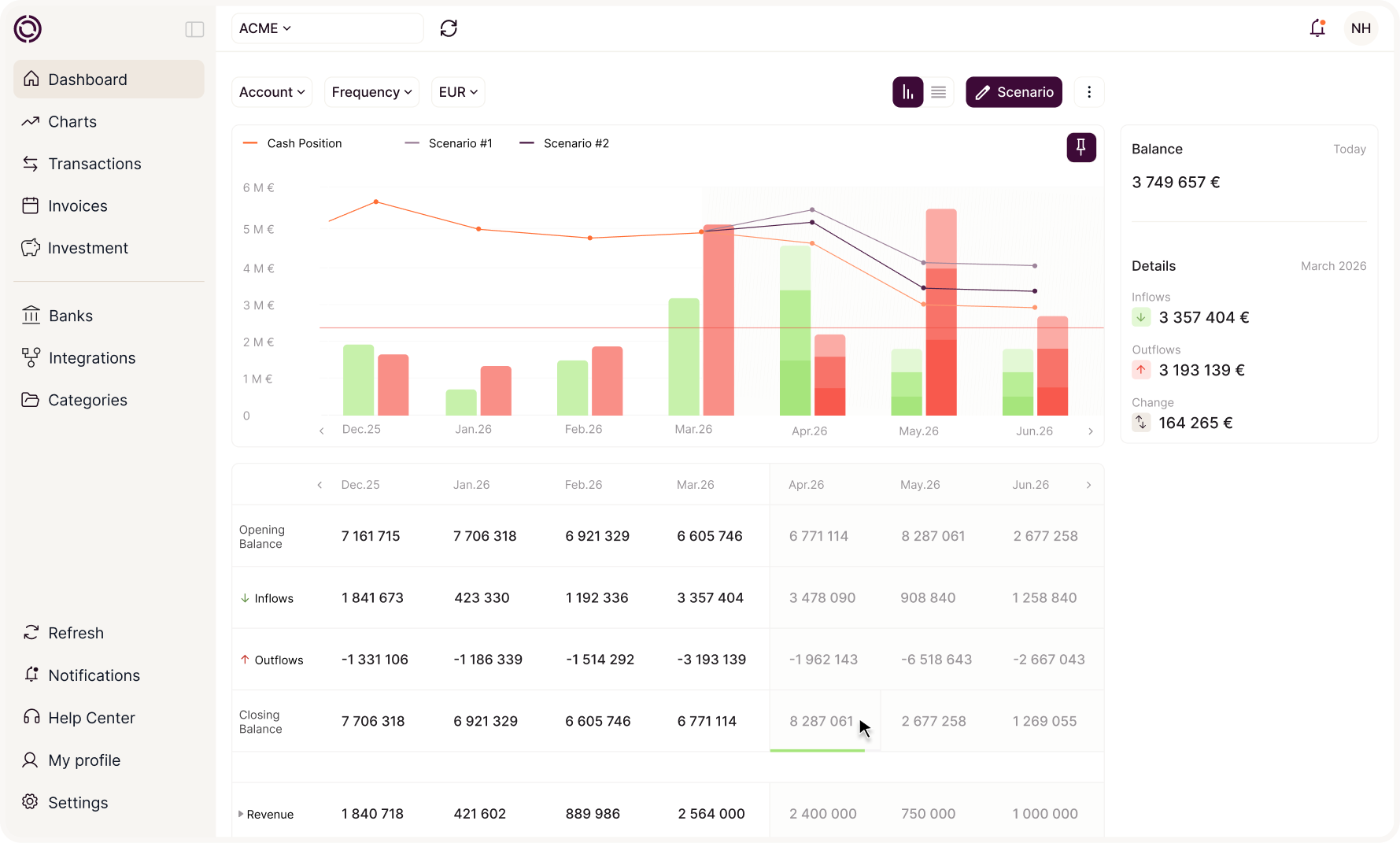
How to optimize cash management for your e-commerce business?
Discover why an e-commerce business particularly needs cash management software, and how Okimia could help.

E-commerce: the essentials on cash management
Cash management is a foundational issue for e-commerce businesses, whose business model relies on highly volatile financial flows, heavy dependence on sales and payment platforms, and substantial marketing investment. Cash is called on continuously to finance inventory, absorb commissions, and support customer acquisition, often before sales are even collected:
Okimia helps online retailers centralize all their financial flows, secure their working capital needs, and precisely manage their business's real profitability, despite the sector's operational complexity.












The specific cash flow challenges e-commerce businesses face
Why is cash management particularly difficult for an e-commerce business?
We've identified 3 major challenges.

Volatile financial flows and multiple sales channels
The e-commerce sector is defined by extreme complexity in its financial flows, generated by a multitude of sales channels. An online store now has to manage direct sales, marketplaces (Amazon, Cdiscount), dropshipping platforms, and social media all at once.
Each channel comes with different payment timelines, commissions, and transaction systems, creating a particularly unstable financial environment that's hard to manage.
This multiplicity of revenue sources creates tracking and reconciliation complexity that quickly becomes unmanageable by hand.

Constant pressure on supply and inventory
E-commerce businesses live under the constant pressure of a delicate balance between available inventory and order flow. The smallest forecasting error can lead to stockouts or overstocking, directly affecting cash flow.
Product lifecycles are getting shorter, particularly in fashion or electronics, forcing entrepreneurs into rapid, substantial inventory investment with no guarantee of full turnover.
This dynamic creates constant pressure on working capital needs, requiring rock-solid financial agility.

Massive marketing investment with uncertain ROI
The e-commerce business model relies heavily on massive ad spend, mainly on digital platforms like Google, Facebook, or Instagram.
These campaigns often represent a significant share of revenue, with budgets that can reach 20 to 30% of revenue.
Yet the return on investment for this spending remains difficult to measure precisely, creating ongoing uncertainty about the actual performance of these investments.
Seasonal variations further compound this difficulty, with marketing spend peaks that can quickly throw cash flow off balance.
How to properly manage cash flow at an e-commerce business?
A few days is all it takes to automate your cash management
01.
02.
03.
Centralize and automate multi-platform financial flow tracking
In the complex e-commerce ecosystem, managing financial flows is a major challenge. A business in this sector has to juggle multiple sales channels: its own site, marketplaces, social media, international platforms. This centralization provides thorough, real-time visibility into all financial movements, eliminating the risk of manual errors and considerably reducing the time spent on bank reconciliation tasks.
Develop cash flow forecasts tailored to e-commerce specifics
The inherent volatility of the e-commerce sector requires particularly dynamic, precise financial forecasting. E-commerce businesses benefit from modeling different complex scenarios that account for seasonal variations, the impact of marketing campaigns, and potential inventory fluctuations. These projections become genuine decision-support tools, helping anticipate financing needs, optimize supply strategies, and secure cash flow against sudden swings in activity.
Secure and optimize financial risk management
E-commerce is particularly exposed to specific financial risks: fraud, exchange rate fluctuations, dependence on payment systems. These factors make cash management all the more complex.

Ready to optimize your cash flow?
Discover how Okimia.com can transform your financial management starting today.
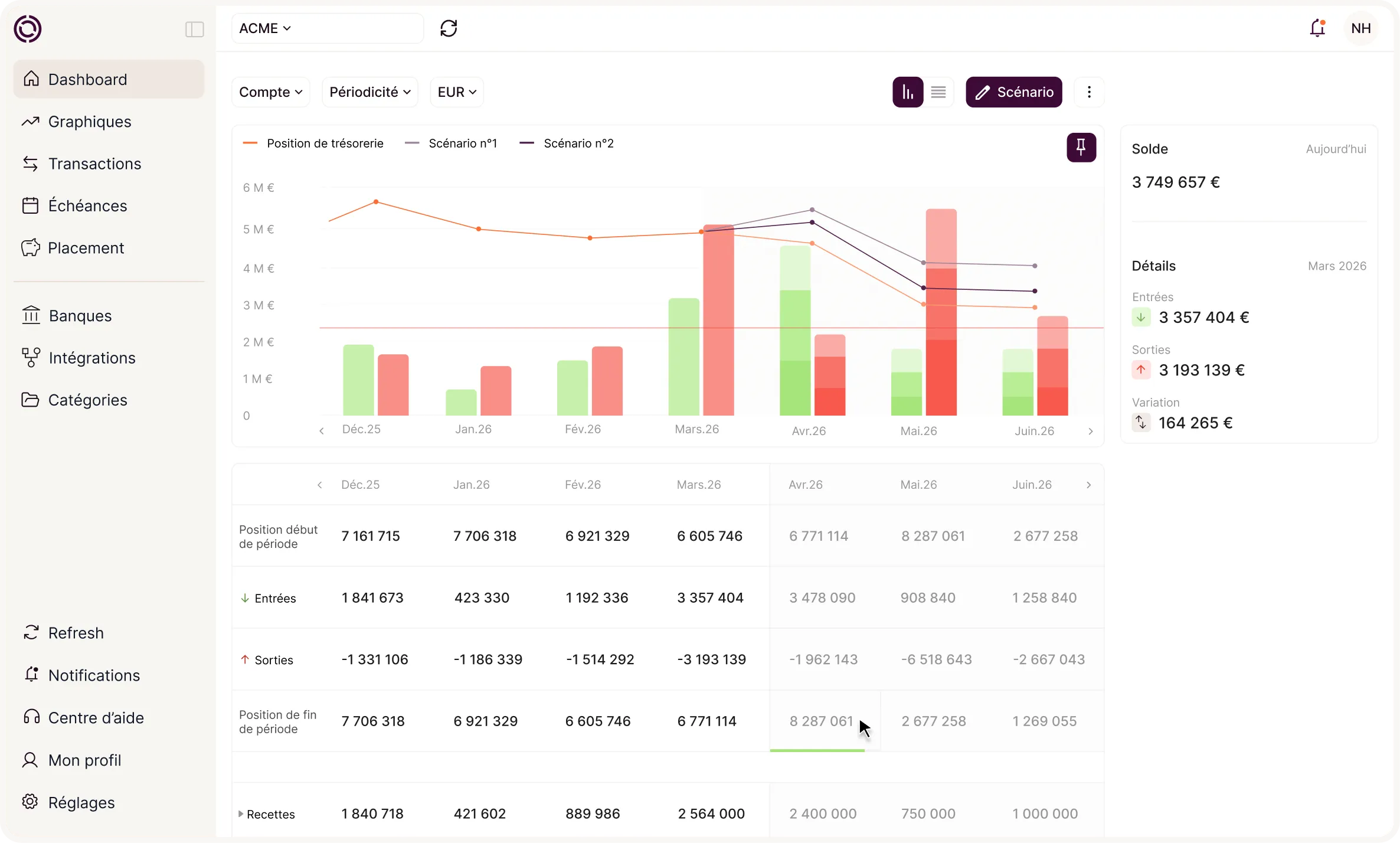
Why use Okimia for your e-commerce business?
Cash management software offers many solutions that address these different needs and best practices for e-commerce. Okimia is cash management software that could very well meet your e-commerce business's needs — let's look at why in detail.
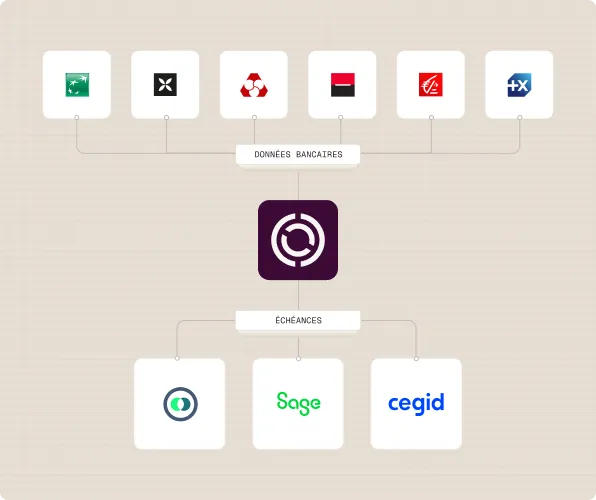
Multi-channel bank synchronization
Centralize and automatically categorize your financial flows from multiple sales platforms
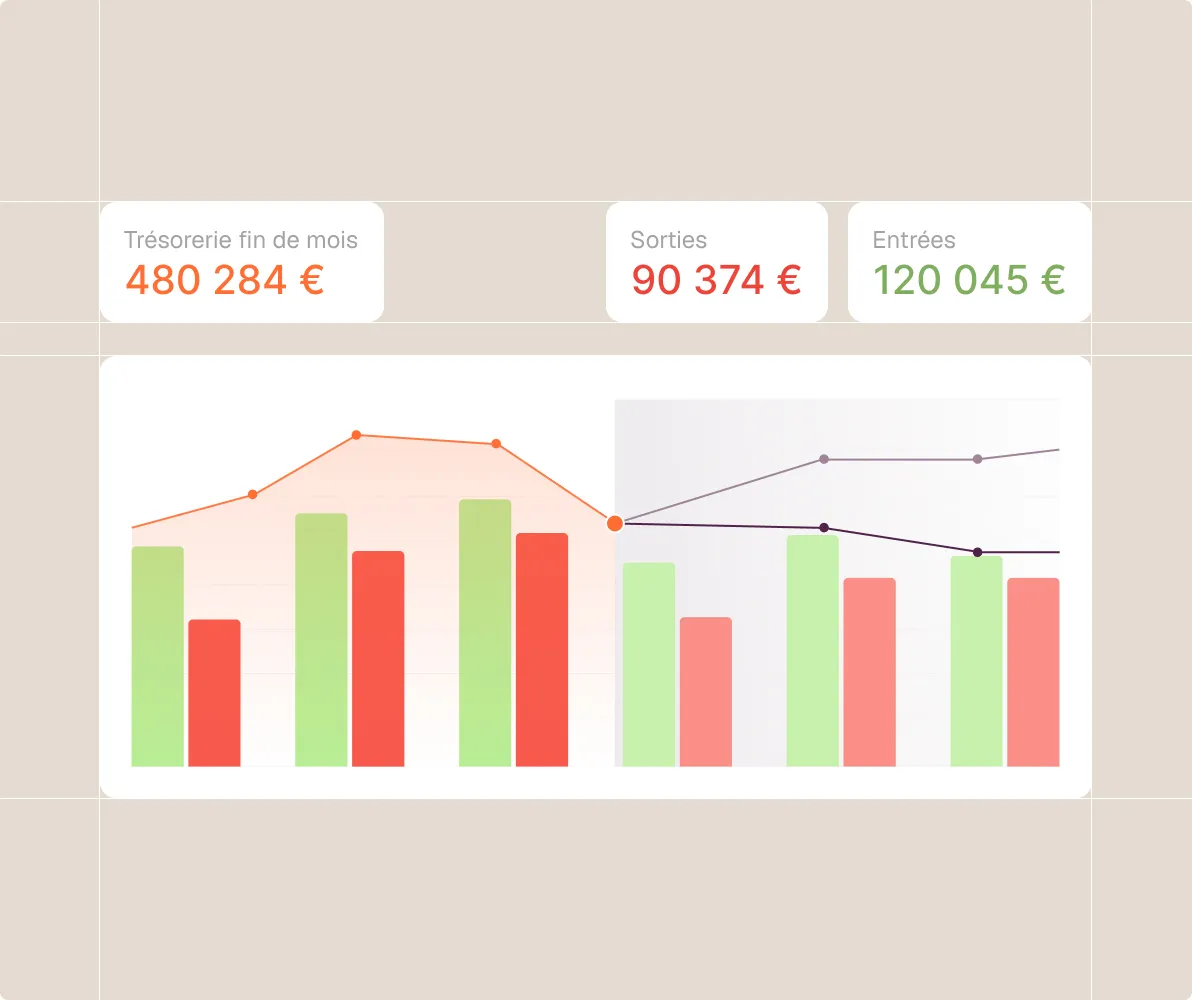
Dynamic cash flow forecasting
Build your financial strategy with tailored scenarios
Continuous optimization of your business model
Precisely measure actual performance vs. forecasts
They chose Okimia
Here's what some of our clients say after choosing Okimia to visualize their financial data:

A huge thank you to Julie from OKIMIA for her patience during our exchanges on how to use the tool! We are very well supported, thank you!

Sochanda Pich
This is THE essential solution for cash management and forecasting! Julie and Dia are always available with incredible responsiveness! Kudos to the whole team!

Stéphane Calleja
OKIMIA is an excellent tool for precise daily tracking of your figures (cash/inflows/outflows/forecast). Thanks to expense categorization, you can very easily forecast outflows, including automatically, over several years. The support team is very responsive and attentive — thank you to them. The solution is stable, easy to use, and flawless. It's ideal for building your budget. Every exceptional expense is tested for feasibility, and sales targets can be set if needed. As a result, I sleep soundly (or I party instead of doing accounting!) Bravo and thank you!

Simon Giron


We're here to help

Have more questions?
Don't hesitate to contact our teams.
What minimum cash ratio should an e-commerce business maintain?
A healthy e-commerce business should maintain the equivalent of 60 to 90 days of fixed costs in available cash. This buffer absorbs seasonal variations and collection delays. During periods of strong growth or before seasonal peaks (Q4), aim for 90–120 days to finance the stock increase without weakening your financial structure.
Which cash flow KPIs should e-commerce businesses track as a priority?
Beyond the bank balance, monitor: Days Sales Outstanding (DSO) measuring average collection delay, stock rotation rate to avoid over-immobilisation, the cash conversion cycle integrating supplier delays, stock, and customers, and the burn rate during heavy marketing spend periods. A monthly dashboard of these indicators allows you to anticipate tensions.
Should e-commerce businesses outsource cash management or keep it in-house?
For an e-commerce business with less than €5M in revenue, a part-time CFO or e-commerce specialist accountant combined with good software generally suffices. Beyond €10M or with strong internationalisation, a dedicated CFO becomes necessary. The key is to have automated tools: manual data entry becomes unmanageable beyond 3–4 active sales channels.
What is the average collection delay on the main marketplaces?
Collection delays vary considerably between platforms: Amazon typically pays every 14 days, Cdiscount within 30 days, while your Shopify store with Stripe can offer payouts in J+2. These gaps create a cash flow need that can reach 45 days between dispatch and actual payment, not counting customer returns that extend these delays further.
Request a demo
30 minutes with a specialist who will set up Okimia for your business. They will answer all your questions and show you the product in real-world conditions.
Free trial
Create your account and connect your banks in 5 minutes. 7 days free to explore Okimia at your own pace, no commitment.