How to optimize cash management for a training provider?
Training providers face very specific cash management challenges. With multiple payment sources (direct individual payments or through the French CPF training-credit account), managing working capital needs is particularly tricky. In this article, let's look at how to optimize this cash management, and how a tool like Okimia could help.

Training providers: the essentials on cash management
Cash management is a key strategic issue for training providers, whose business model relies on multiple funders, irregular training cycles, and heavy dependence on public funding schemes. The pressure comes from a structural imbalance between constant fixed costs, payment delays, and uncertainty over future funding:
Okimia helps training providers secure their cash flow, build reliable financial projections, and take back control of their working capital needs, despite the sector's administrative complexity.












The specific cash flow challenges training providers face
Why is cash management particularly difficult for a training provider? We've identified 3 major challenges.

Multiple, complex funding sources
In the training and education sector, providers have to manage several funding sources at once: public subsidies, private funding, OPCO (employer training bodies), and individual or professional training funds.
This multiplicity creates considerable administrative and financial complexity. Each funding source has its own rules, payment schedules, and specific conditions, generating constant timing gaps between costs incurred and expected revenue.
Managing these flows becomes a real obstacle course, where the smallest mistake can jeopardize the provider's financial balance.
Seasonality and disrupted training cycles
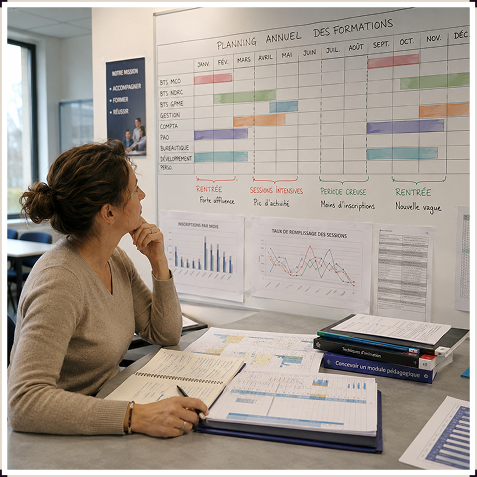
The training sector experiences very pronounced seasonality, with periods of intense activity alternating with slow periods.
Back-to-school periods, continuing education sessions, and professional development programs follow specific cycles that structurally weaken cash flow.
Providers have to cover substantial fixed costs (staff, facilities, equipment) while revenue remains discontinuous and sometimes uncertain. This irregular financial rhythm requires constant vigilance and ongoing adaptability to maintain a fragile economic balance.

Dependence on public policy and economic shifts
Training providers are particularly exposed to changes in public policy and economic shifts.
Vocational training reforms, regulatory changes, and shifts in the labor market can instantly change funding conditions and training arrangements.
This structural instability creates constant uncertainty over future resources. Providers have to continuously anticipate, adapt, and diversify their revenue sources, while maintaining a sufficient level of investment to stay competitive in an ever-changing environment.
How to properly manage cash flow at a training provider?
A few days is all it takes to automate your cash management
01.
02.
03.
Anticipate and manage financial seasonality
Vocational and continuing education involves complex, highly variable financial cycles. Providers need to take a proactive approach to their cash flow, precisely mapping their critical periods. This means carefully identifying the times of year when financial flows will be tight, particularly during gaps between training sessions or transitions between different programs. By anticipating these cycles, managers can build financial reserves, negotiate suitable credit lines, and adjust their educational investments. A detailed understanding of these dynamics helps turn potential financial fragility into a strategic growth opportunity.
Diversify and secure funding sources
A training provider's financial resilience depends on its ability to expand and secure its revenue sources. This means building a varied funding ecosystem, combining public subsidies, private funding, company contributions, and vocational training funds. The key lies in the ability to build lasting strategic partnerships, respond effectively to calls for proposals, and create programs that appeal to different funders. This diversification significantly reduces financial risk and provides multi-year visibility into potential resources, making the provider less dependent on a single funding source.
Streamline administrative and financial tracking
Administrative management at training providers requires absolute rigor and traceability. Setting up standardized processes for tracking agreements, training hours, supporting documents, and reimbursements becomes crucial. This streamlining requires systematically centralizing documents, precisely classifying different funding types, and secure digital archiving. The goal is to simplify audits, reduce the risk of errors, and make it easier to produce detailed reports for different funders. This approach not only improves administrative efficiency but also strengthens the provider's credibility and transparency with its institutional and financial partners.

Ready to optimize your cash flow?
Discover how Okimia can transform your financial management starting today.
Why use Okimia for a training provider?
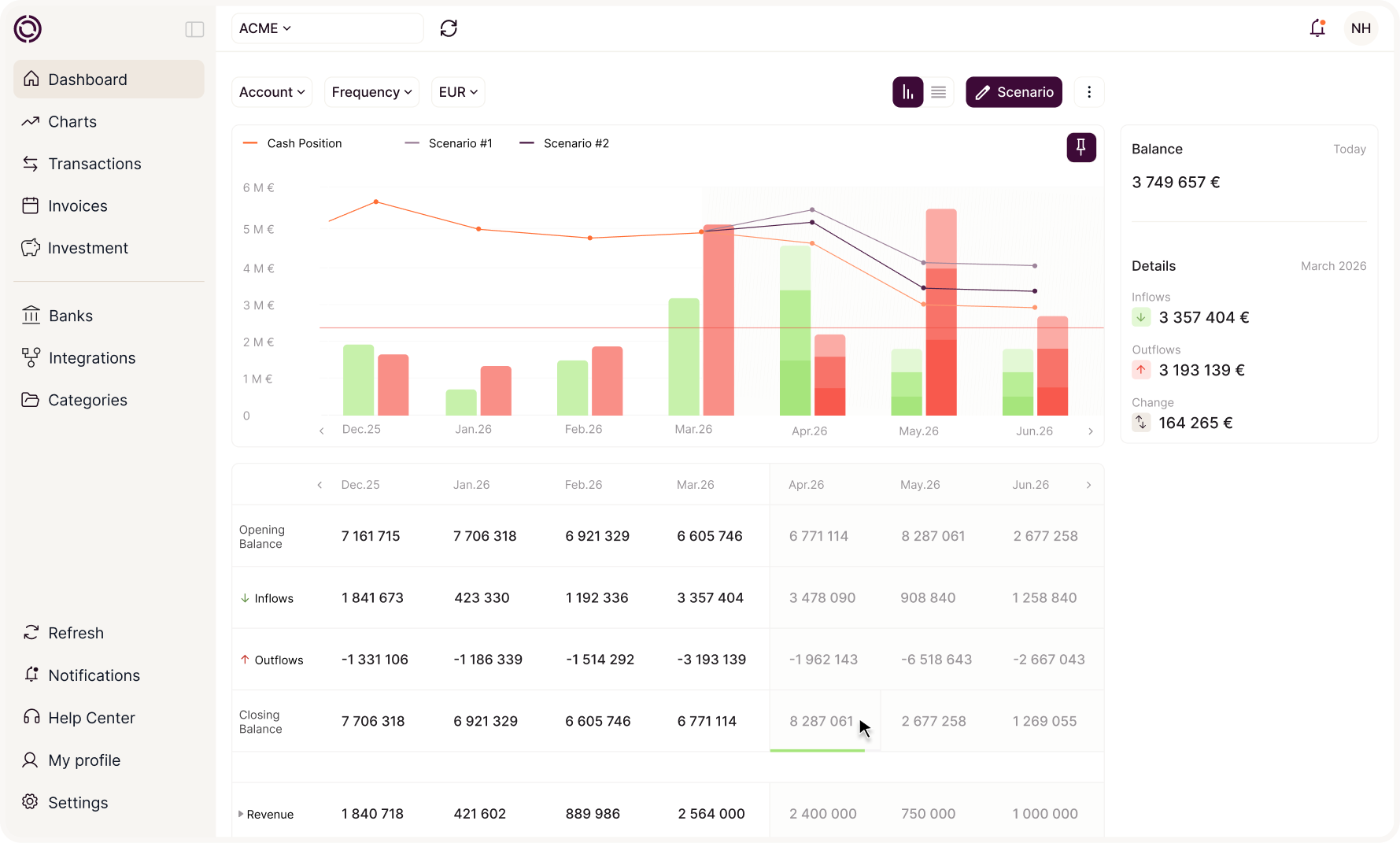
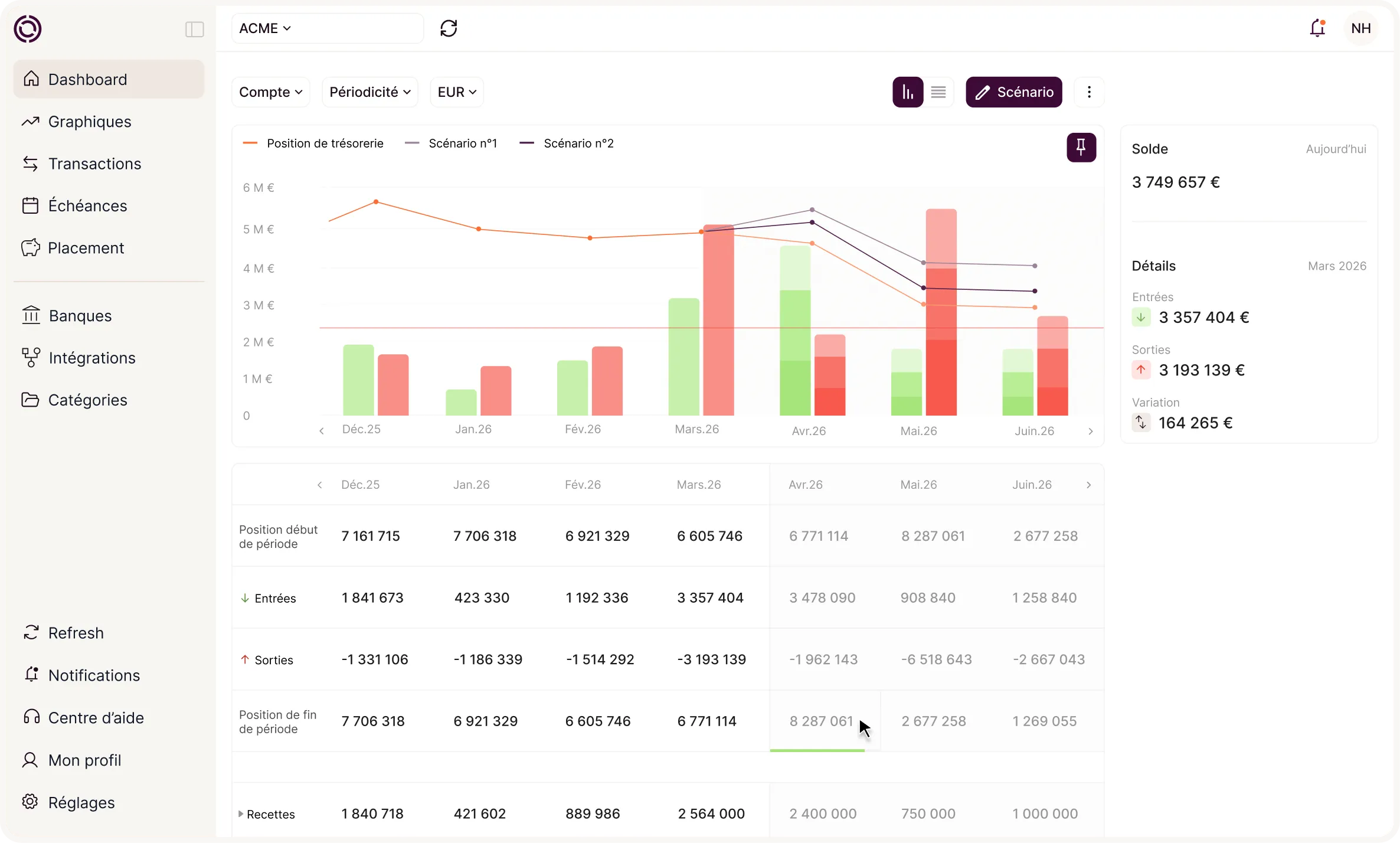
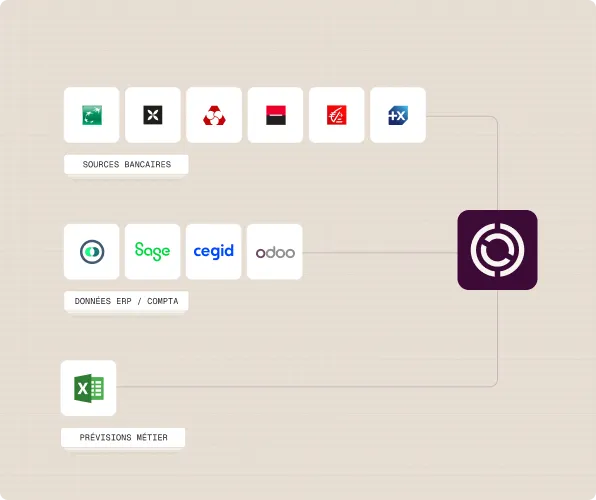
The solution for managing your training provider: Okimia. Okimia is cash management software ideally suited to managing your training provider's cash flow. Let's look at why in the rest of this article.
Financial management of training flows
Simplify the management of your multi-partner financial resources
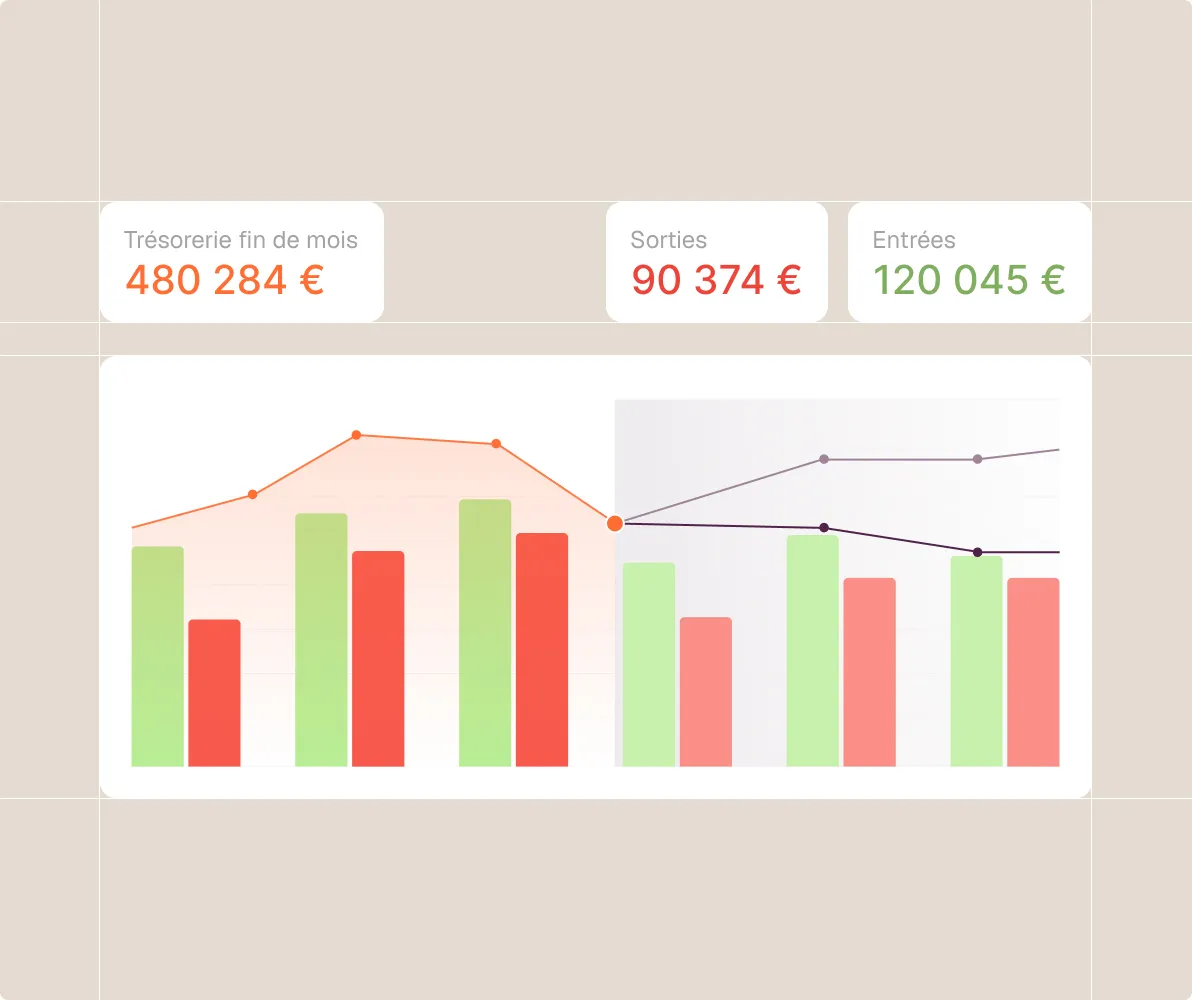
Financial projection of training cycles
Anticipate your financial needs with tailored scenarios
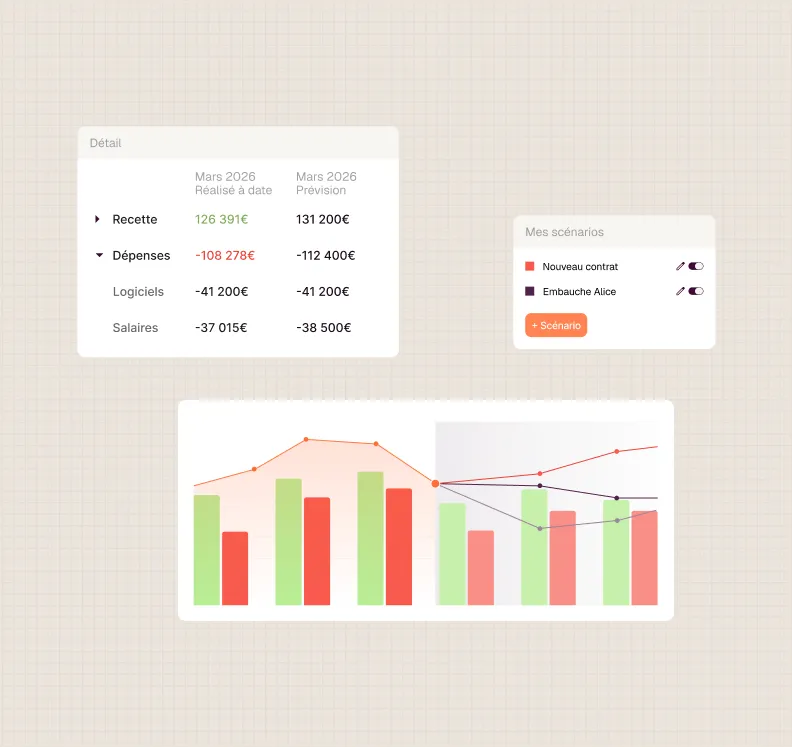
Forecast-vs-actual comparative analysis
Optimize your margins and adjust your strategies instantly
They chose Okimia
Here's what some of our clients say after choosing Okimia to visualize their financial data:

Okimia is life! We use it at MyES 😇

Deborah Guillotin

Top-notch service — my account manager is gentle and pedagogical, I recommend. The software is super comprehensive.

Christian Chapolard
A huge thank you to Julie from OKIMIA for her patience during our exchanges on how to use the tool! We are very well supported, thank you!

Sochanda Pich


We're here to help

Have more questions?
Don't hesitate to contact our teams.
How do I know if my training organisation needs cash management software?
Your organisation needs such a tool if you face difficulties tracking your multiple funding sources, if grant management becomes complex, or if you lack visibility on your financial balances. This is particularly relevant if you manage several training programmes or sites.
Who are the competitors in the training organisation management software market?
The market offers several solutions, but few are truly adapted to the specifics of the training sector. It is crucial to choose a tool that understands the economic particularities of your activity: multiplicity of funding sources, programme tracking, grant traceability.
How much does cash management software cost for a training organisation?
Prices vary depending on the size and complexity of your organisation. You should consider not only the software cost, but also the potential gain in terms of funding management, grant tracking, and pedagogical resource optimisation.
How do I build reliable cash flow forecasts for a training organisation?
Collect historical data on your different training types, incorporating the seasonality specific to the sector (school terms, professional training periods). Precisely analyse your funding sources: public grants, private funding, OPCOs. Account for the time lags between costs (salaries, equipment) and collections. Build scenarios that integrate funding variability and potential regulatory changes.
What are the advantages of cash management software over Excel for a training organisation?
A cash management tool offers complete automation that addresses the sector's complexities. Unlike Excel, it enables simultaneous tracking of different funding sources, precise tracing of grant usage, and dynamic dashboards per training programme. Automatic bank synchronisation and the ability to project needs based on training cycles are major assets.
How do I choose cash management software for a training organisation?
To choose the right software, first identify your specifics: training volume, multiplicity of funding sources, number of programmes. Prioritise a tool capable of managing the complexity of funding flows (OPCOs, grants, companies, individuals). Check the ability to track different types of training (face-to-face, e-learning) and ensure the software enables precise traceability of conditional funding.
How long does it take to implement cash management software for a training organisation?
Implementation varies depending on the complexity of your structure. For a training organisation, this can take from a few days to several weeks, depending on the number of programmes, sites, and funding sources. It's important to allow adaptation time to integrate all specific financial flows and configure grant tracking.
Request a demo
30 minutes with a specialist who will set up Okimia for your business. They will answer all your questions and show you the product in real-world conditions.
Free trial
Create your account and connect your banks in 5 minutes. 7 days free to explore Okimia at your own pace, no commitment.