Optimizing cash management in food and beverage (F&B)
F&B businesses face cash management challenges of their own. The goal of this content is to lay out the different difficulties F&B businesses can face, the solutions available, and in particular the use of cash management software like Okimia.

Food & beverage (F&B): the essentials on cash management
Cash management is a major strategic issue for Food & Beverage businesses, which face high cost volatility, complex supply chains, and heavy regulatory constraints. The pressure comes from a structural imbalance between unstable input costs, demanding production cycles, and constant margin pressure:
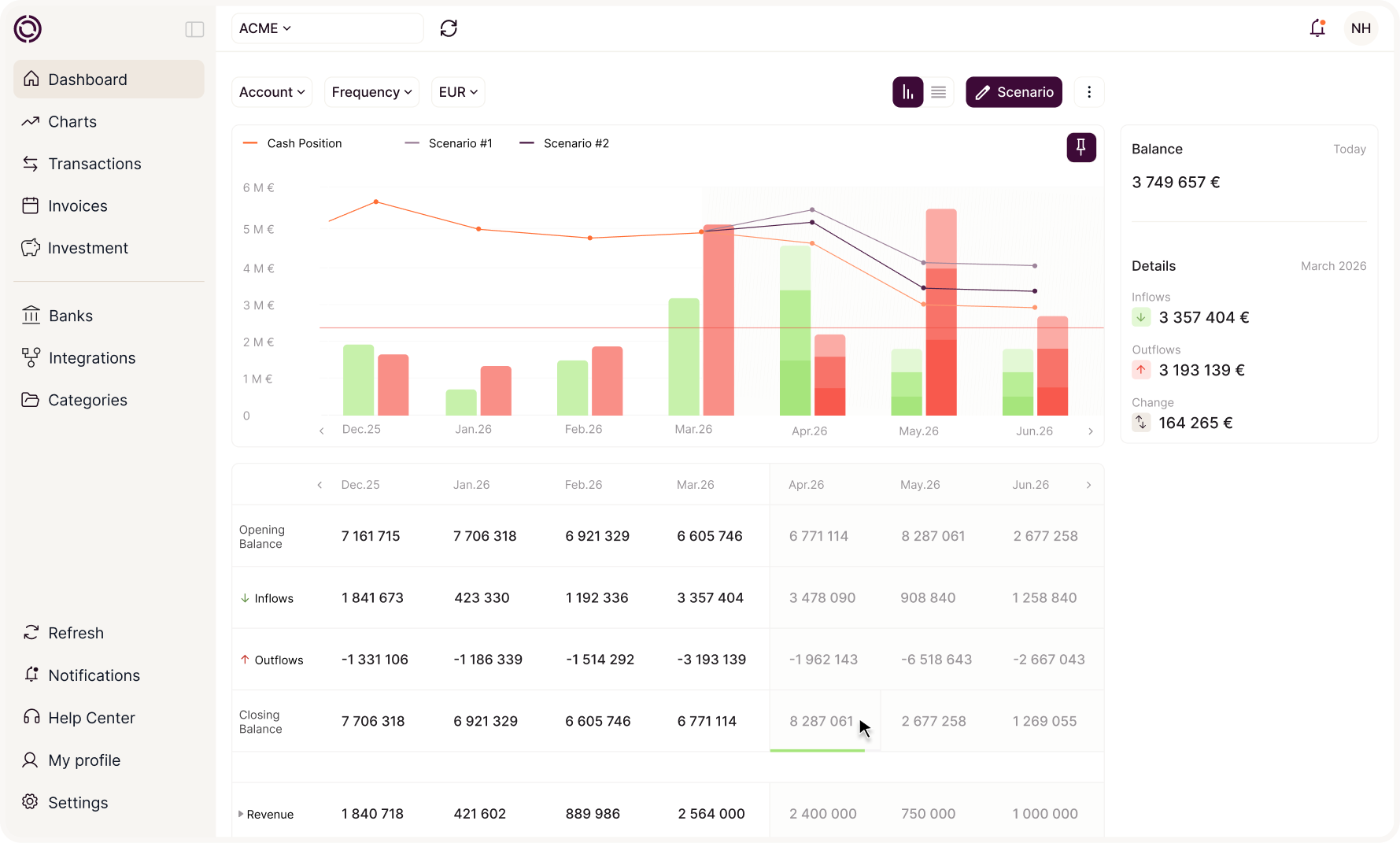
Okimia helps F&B businesses secure their cash flow and margins, providing a clear, forward-looking, operational view of financial flows.












The specific cash flow challenges food and beverage businesses face
Why is cash management particularly difficult for a business in the F&B sector?
We've identified 3 major challenges.

Extreme volatility in raw material prices
The Food and Beverage sector faces unprecedented volatility in agricultural raw material prices.
Swings can be sharp and unpredictable, driven by climate, geopolitical, and speculative factors. A food or beverage producer can see supply costs spike within a few weeks, with no real ability to immediately adjust selling prices.
This constant instability puts ongoing pressure on margins and requires unwavering financial vigilance.

Complex international supply chains
Food sector businesses now operate on extremely complex global supply chains, which multiply financial risk.
Every link in this chain represents a potential point of fragility: exchange rate variation, logistics constraints, differing payment terms by country, changing local regulations.
A single incident can quickly turn into a cash flow crisis, forcing the business into rapid, precise financial adjustments.

Demanding regulatory and technology investment
The food sector is subject to increasingly strict health regulations, requiring substantial, recurring technology investment.
Traceability, food safety, and sustainability standards impose significant costs that need to be anticipated and factored into financial strategy.
These regulatory constraints, combined with the need to constantly innovate to meet new consumer expectations, create ongoing financial pressure on businesses in the sector.
How to properly manage cash flow at an F&B business?
A few days is all it takes to automate your cash management
01.
02.
03.
Manage supply cost volatility
Supply management is a major challenge for food sector businesses, facing constant fluctuations in raw material prices. An effective strategy is to take a proactive approach to negotiating and diversifying supply sources.
This means building strong relationships with multiple suppliers, negotiating flexible contracts that can absorb price swings, and building strategic reserves for periods of high volatility.
The ability to anticipate and quickly adapt to market changes becomes a decisive competitive advantage, helping maintain stable margins despite economic uncertainty.
Optimize production and sales cycle management
Food sector businesses need to develop a very precise understanding of their operating cycle, perfectly syncing production, storage, and sales phases. This optimization requires a precise understanding of inventory turnover times, product shelf life, and consumption trends.
It becomes essential to set up forecasting mechanisms that let you instantly adjust production based on sales forecasts, reducing the risk of overstocking or shortages. The ability to anticipate seasonal variations, changing consumption habits, and regulatory constraints becomes a major financial performance lever.
Strategically manage international financial risk
The food sector is defined by its growing international dimension, involving significant exposure to currency risk and geopolitical shifts.
Proactively managing this risk requires developing sophisticated hedging strategies, using appropriate financial mechanisms. This means not only closely monitoring exchange rates, but also building financial scenarios that account for potential geopolitical shifts, trade tensions, and regulatory upheaval.
The ability to maintain financial flexibility while securing international supply becomes a crucial strategic issue for the business's long-term survival.

Ready to optimize your cash flow?
Discover how Okimia.com can transform your financial management starting today.
Why use Okimia for an F&B business?
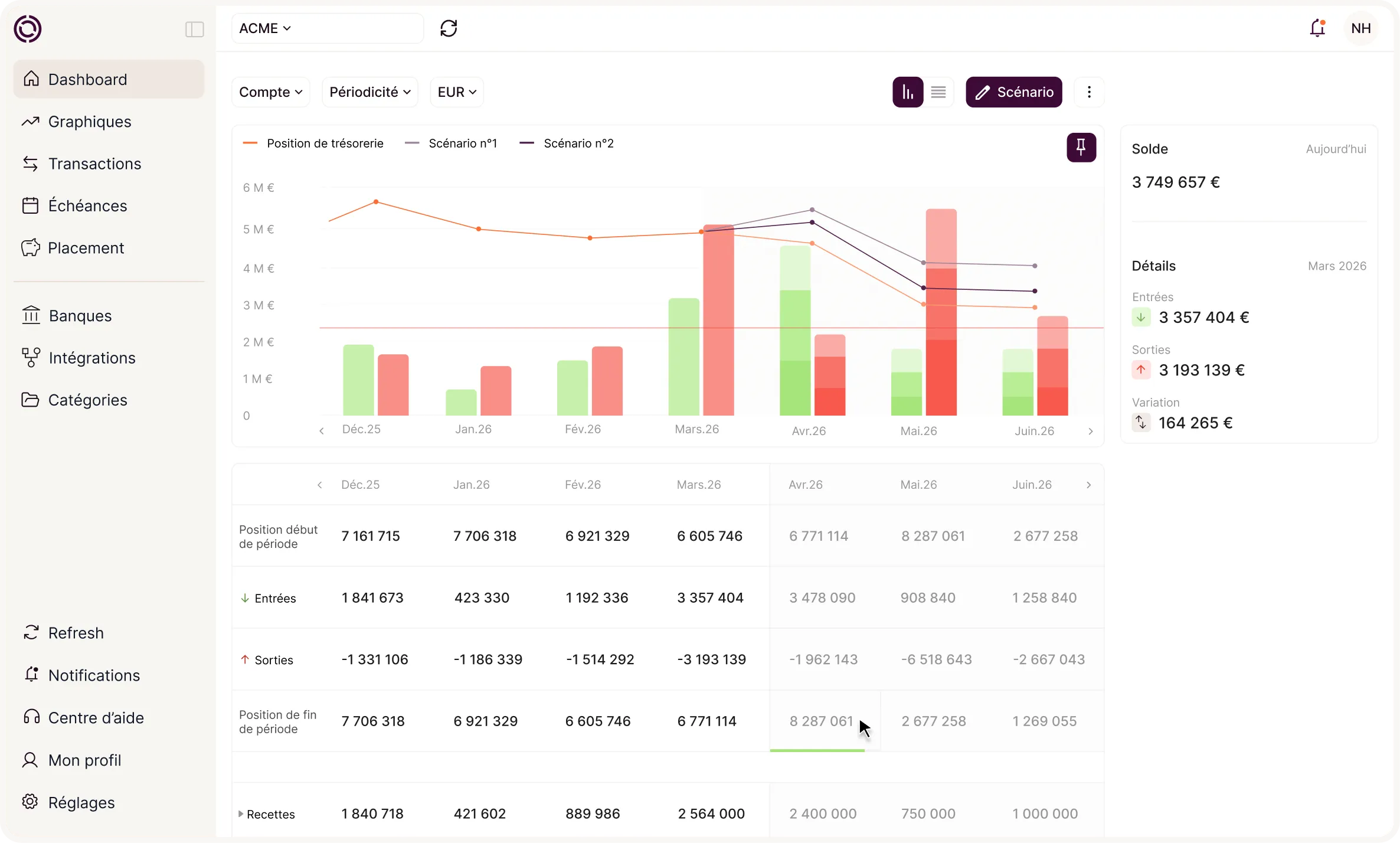
The best-suited solution for handling F&B challenges: cash management software like Okimia. Okimia already serves many businesses in this sector. Read on to see why Okimia is the ideal solution.
Food sector financial management
Turn your banking data into strategic intelligence
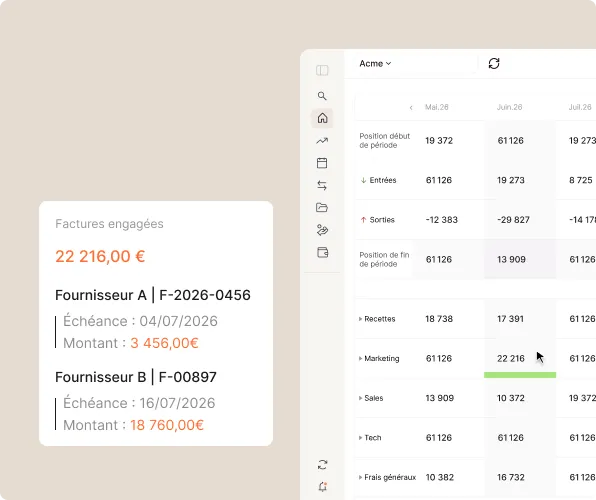
Forward-looking financial strategy
Anticipate the complex fluctuations of your food business

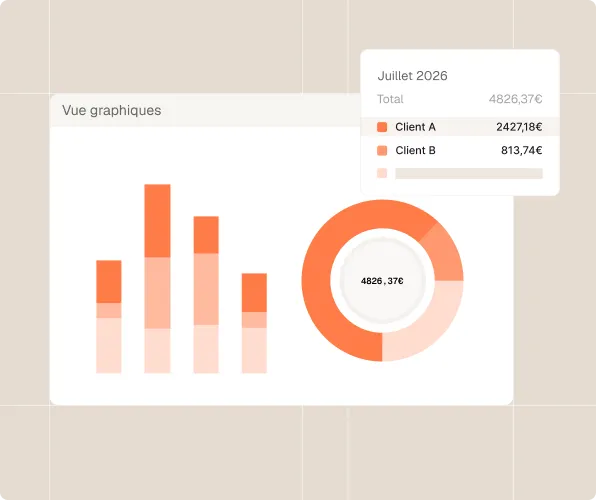
Continuous performance optimization
Turn your data into competitive levers
They chose Okimia
Here's what some of our clients say after choosing Okimia to visualize their financial data:

No entrepreneur likes tracking their cash flow. And yet, it's the #1 cause of startup failure. I tried everything on my own without success. Until I discovered Okimia. Finally a simple and intuitive tool. That I actually enjoy using. Okimia lets me: - Track my cash position in real time - Build my custom financial forecast - Compare actuals vs. forecasts - Automatically estimate VAT - Run scenarios. No more bad surprises. I've gained peace of mind and KOKO Kombucha is all the better for it.

Laura Chetail
Okimia can help you better control your expenses and manage them over time, because you have a global and long-range view of your cash flow. It doesn't happen by itself, but I must admit that Okimia is very comprehensive and provides a significant time saving.

Dany Fernandez

Great software and great sales team, I recommend.

Isabelle Orsetti


We're here to help

Have more questions?
Don't hesitate to contact our teams.
Who are the competitors in the food and beverage cash management software market?
The market offers several specialist solutions such as Okimia, Agicap, and more generalist solutions adaptable to the sector. The choice will depend on your size, type of production (industry, craft, distribution), and your specific needs in terms of traceability and risk management.
How do I build reliable cash flow forecasts in the food and beverage sector?
For precise forecasts, collect historical data covering at least 24 months, taking into account the volatility of food markets. Incorporate specific seasonal cycles, raw material price variations, and potential impacts of health regulations. Build scenarios accounting for geopolitical risks, emerging consumption trends, and potential innovation investments.
What are the advantages of cash management software over Excel in the food and beverage sector?
A cash management tool offers complete automation of food industry-specific processes. Unlike Excel, it enables real-time tracking of raw material price variations, modelling the impact of regulatory and climate fluctuations, and generation of dashboards adapted to sector particularities. Automatic bank synchronisation facilitates tracking of international flows and foreign exchange risk management.
How do I choose cash management software for a food and beverage company?
To choose the right software, identify your specific needs: managing international supplies, tracking raw material variations, and integrating regulatory constraints. Prioritise a solution offering precise financial flow traceability, production cost projection capability, and foreign exchange risk management. Ensure the software can handle the complexity of your supply chain and adapt to the rapid changes in the food sector.
Request a demo
30 minutes with a specialist who will set up Okimia for your business. They will answer all your questions and show you the product in real-world conditions.
Free trial
Create your account and connect your banks in 5 minutes. 7 days free to explore Okimia at your own pace, no commitment.