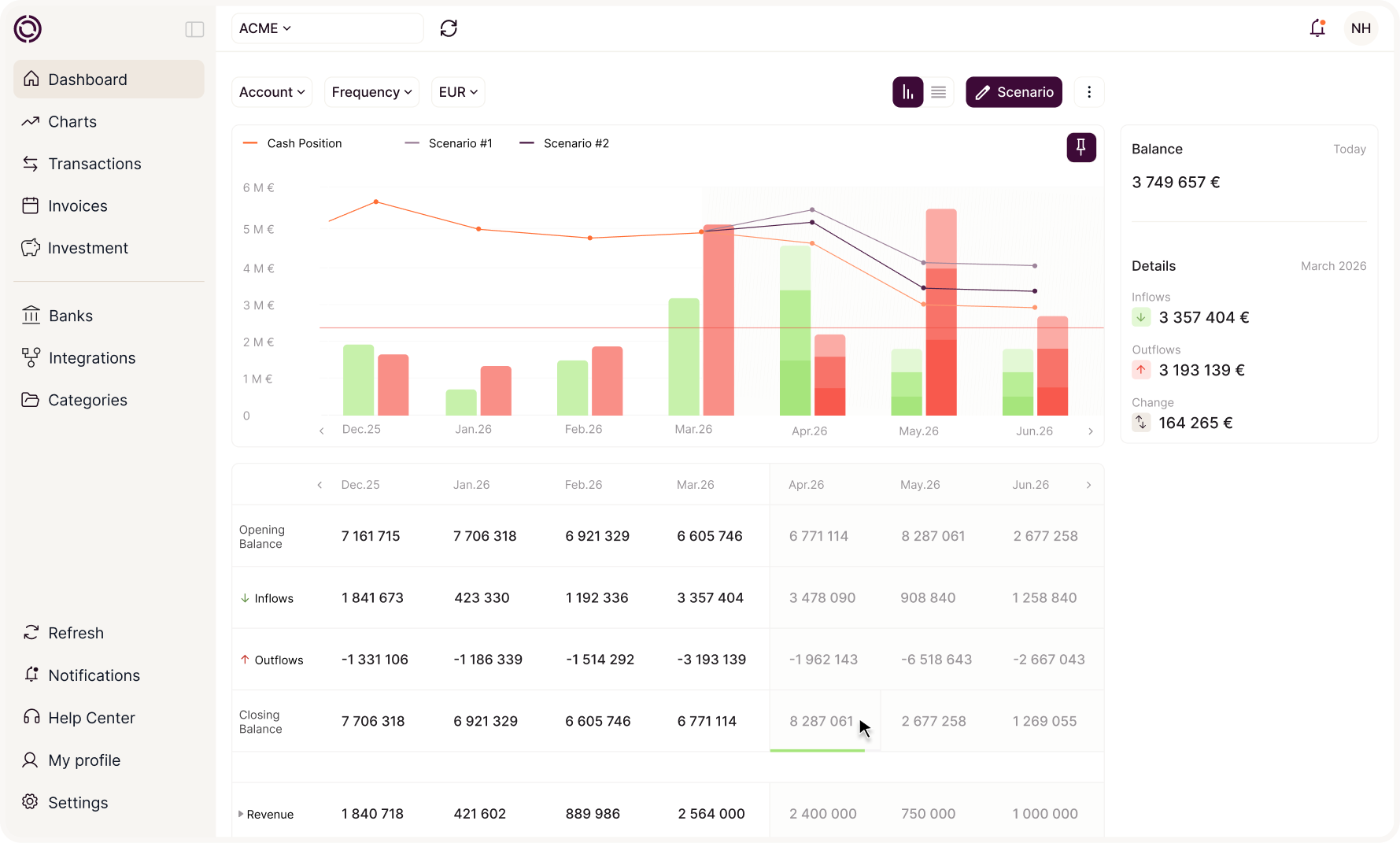
How to optimize cash management in real estate?
The real estate sector is complex when it comes to cash management: it requires significant investment, and its revenue depends heavily on macroeconomic factors that are difficult to predict. In this article, let's look at the solutions for tackling these very specific cash management challenges.

Real estate: the essentials on cash management
Cash management is a critical issue in the real estate sector, marked by heavy investment, long cycles, and high exposure to macroeconomic factors. The pressure comes from a structural mismatch between capital committed, the timing of cash flows, and market uncertainty:
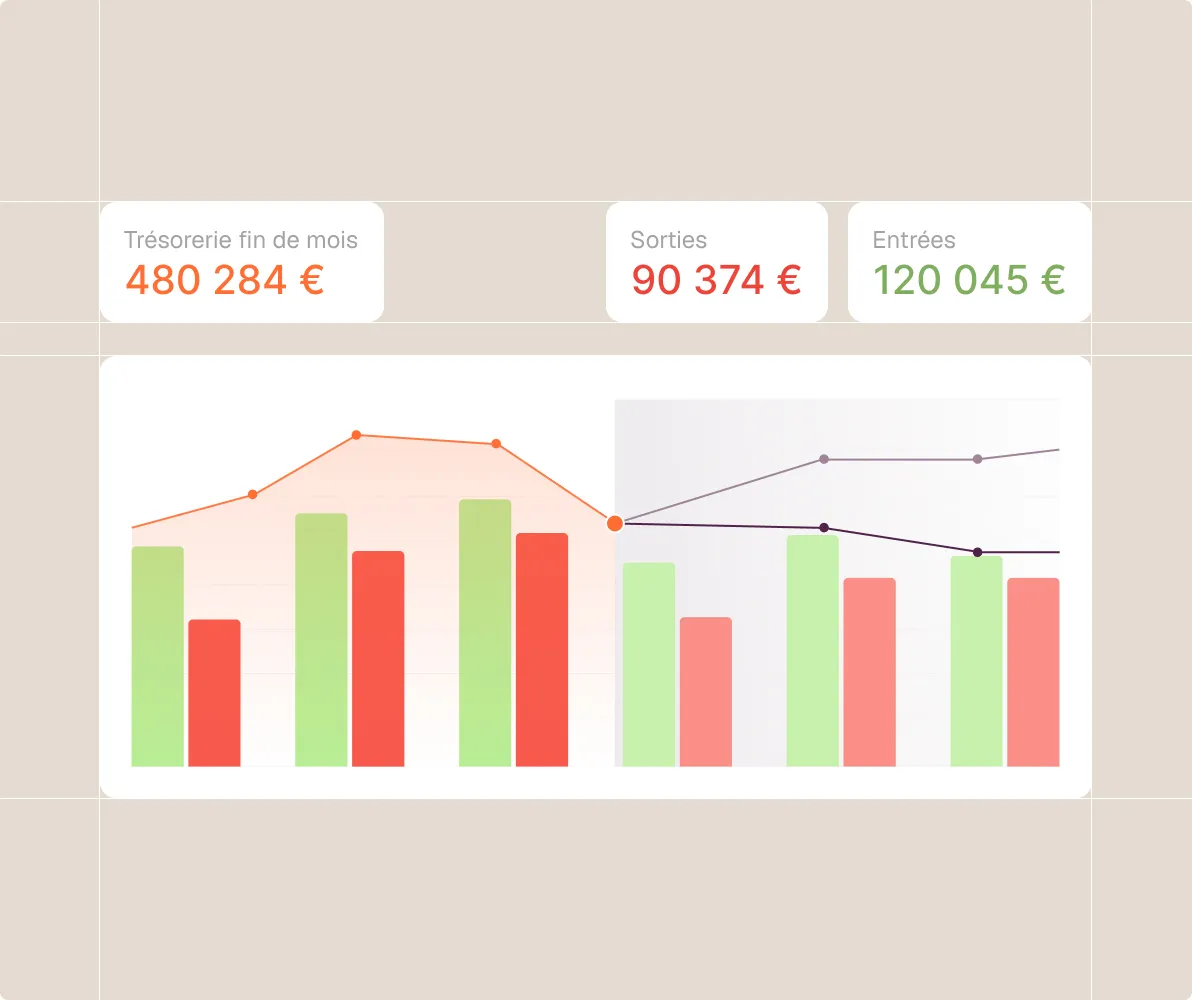
Okimia helps real estate players secure their cash flow and investments, providing a clear, segmented, forward-looking view of financial flows.












The specific cash flow challenges in real estate
Why is cash management particularly difficult for a real estate business?
We've identified 3 major challenges.

A massive timing gap between investment and revenue generation
The real estate sector is defined by extremely long, costly investment cycles, where the initial financial commitment is substantial while the return on investment plays out over several years.
A developer or real estate investor has to commit significant capital to build or acquire a property, with no guarantee of immediate income.
This gap puts constant pressure on cash flow, as the business has to fund major costs — studies, land, construction, permits — well before it can generate rental or sales income.

Multiple, complex financial flows
Real estate stands out for the sheer diversity and complexity of its financial flows, making cash management particularly challenging.
A real estate project involves investment, construction, rental, and potentially resale flows all at once, each with its own timeline and risks.
Successive capital calls, staggered disbursements, variable rental income, and potential capital gains create an extremely fluid financial environment that's difficult to anticipate.

Volatility and dependence on macroeconomic conditions
The real estate sector is inherently tied to macroeconomic conditions, which creates significant cash flow volatility.
Changes in interest rates, rental market conditions, tax regulations, and economic cycles can instantly change a project's profitability.
This dependence creates constant uncertainty, where the ability to anticipate and adapt becomes crucial to maintaining the business's financial balance.
Best practices for cash management in real estate
A few days is all it takes to automate your cash management
01.
02.
03.
Segment and precisely track financial flows by program
Financial management in real estate requires an ultra-granular approach, where every real estate program needs to be tracked individually. This means creating thorough traceability of investments, allowing you to understand exactly how profitable each project is. By carefully breaking down construction costs, financing, rental income, and capital-gain prospects, developers can manage their operations with full transparency. This segmentation offers a dynamic view that makes it possible to quickly weigh different programs against each other, identify the best performers, and strategically reallocate financial resources.
Build multi-parameter financial simulations
Real estate is a complex sector where the ability to project and anticipate is a major competitive advantage. High-performing businesses develop financial simulation capabilities that factor in multiple economic variables, such as interest rates, rental market trends, and potential regulatory changes. These projections need to include several scenarios (optimistic, baseline, pessimistic) to provide a robust forward-looking view. The goal is to have a forecasting map that allows for continuous adjustment of investment strategy and minimizes the financial risks inherent to the sector.
Develop a proactive approach to financial risk management
Financial resilience in real estate relies on constantly anticipating potential cash flow pressure. This means setting up ongoing monitoring of revenue cycles, cash flow gaps, and financing needs. The goal is to build dynamic dashboards that can quickly detect early warning signs of financial strain. Building cash reserves, diversifying funding sources, and proactively negotiating additional credit lines are all part of this risk management strategy.

Ready to optimize your cash flow?
Discover how Okimia.com can transform your financial management starting today.
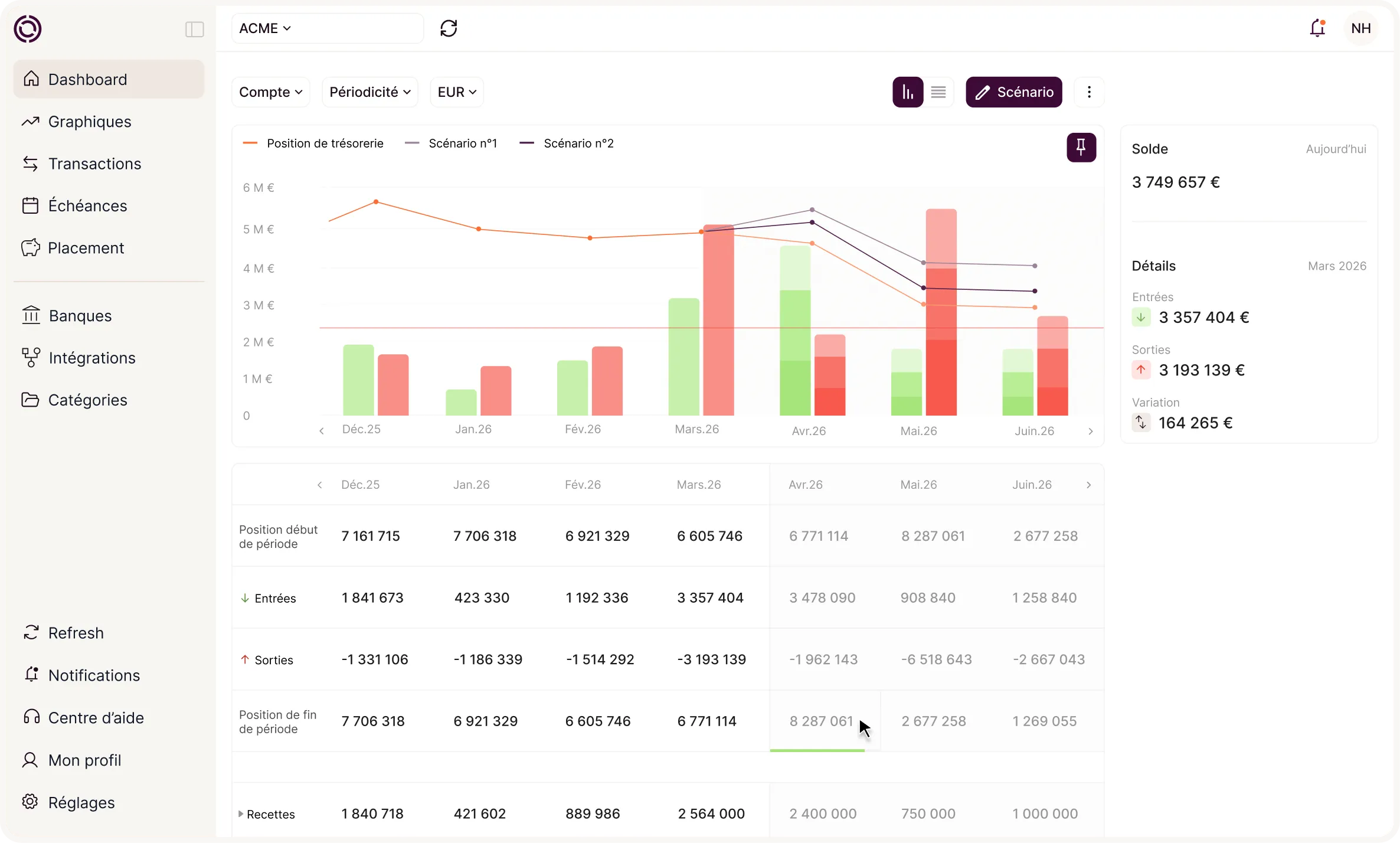
Why use Okimia in the real estate sector?
The solution for optimizing your cash management in real estate: use Okimia. We offer a cash management solution particularly well suited to the real estate sector.
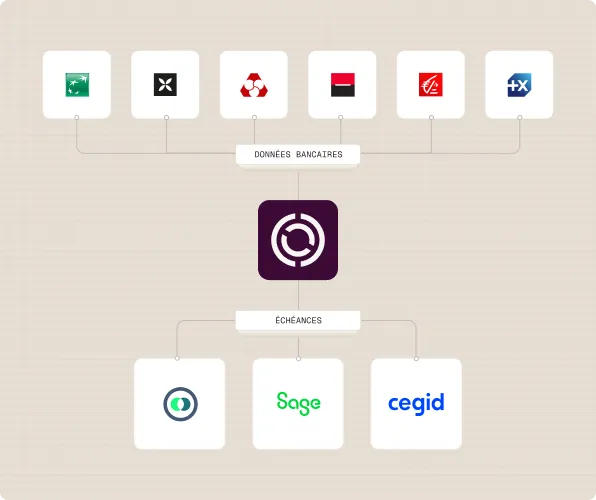
Real estate bank synchronization
Centralize and automate financial traceability across your real estate programs
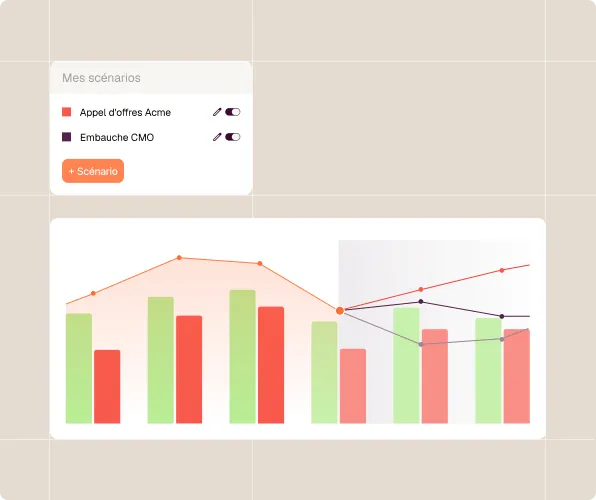
Real estate cash flow forecasting
Simulate and anticipate the financial performance of your programs
Real estate financial dashboard
Precisely measure the performance of each investment
They chose Okimia
Here's what some of our clients say after choosing Okimia to visualize their financial data:
OKIMIA is a simple and intuitive solution for managing and monitoring your cash flow. Bank integration is quick and bug-free — I recommend it 100%. My account manager was amazing from start to finish: energetic, available, responsive, and super efficient! THANK YOU OKIMIA TEAM (no one paid me to say this!)

Jean-Baptiste Mignot de Bresc

I use Okimia to see my cash flow more clearly, and as a startup, it makes a real difference. The tool is simple and intuitive — I recommend it!

Thomas Sadoul
Alexia from OKIMIA is truly attentive and service-oriented — for once I have a software vendor who isn't just there to sell, but genuinely cares about the user experience. I highly recommend!

Sébastien Théophile


We're here to help

Have more questions?
Don't hesitate to contact our teams.
How do I build reliable cash flow forecasts in real estate?
To build robust forecasts, collect detailed historical data on your real estate programmes. Precisely analyse investment cycles, construction periods, and potential rental income. Factor in all specific costs (permits, building standards, marketing costs) and anticipate market scenarios. Use multi-criteria simulations accounting for real estate market volatility and update your projections regularly.
What are the advantages of cash management software over Excel for a property developer?
A cash management tool offers complete automation of complex real estate processes, significantly reducing error risks. Unlike Excel, it enables real-time project tracking, dynamic projection of rental income, and precise profitability analysis by project. Automatic bank synchronisations and specific tax calculations (real estate VAT, depreciation) are major assets for real estate professionals.
How long does it take to implement cash management software for a property developer?
Implementation varies depending on the complexity of your property portfolio, typically between a few weeks and two months. The process involves integrating historical data, configuring different programmes, and synchronising bank accounts. The implementation phase requires close collaboration between your financial teams and the software publisher to ensure optimal configuration.
How do I know if my real estate company needs cash management software?
Your company needs such a tool if you manage several programmes simultaneously, if you face financial projection difficulties, or if you lack visibility on the profitability of your different assets. This is particularly relevant if your property portfolio exceeds one million euros.
How do I choose cash management software for a real estate company?
To choose the right software, identify your specific needs: volume of real estate programmes, number of simultaneous projects, complexity of financial flows. Prioritise a solution offering precise investment traceability, multi-programme management, and financial simulation features. Check the software's ability to manage real estate tax particularities and ensure it enables detailed tracking of different property assets.
How much does cash management software cost for a real estate company?
Prices vary significantly depending on the size of your company and the complexity of your programmes. For a medium-sized real estate company, allow between €200 and €1,000 per month, with modular options depending on the number of projects and bank accounts to track. The investment should be considered a strategic financial optimisation tool.
Who are the competitors in the real estate cash management software market?
Main competitors include Agicap and more generalist solutions. Okimia stands out for its value for money, flexibility, unique specialisation in cash management, and intuitiveness.
Request a demo
30 minutes with a specialist who will set up Okimia for your business. They will answer all your questions and show you the product in real-world conditions.
Free trial
Create your account and connect your banks in 5 minutes. 7 days free to explore Okimia at your own pace, no commitment.