How to optimize cash management for a retail business?
Cash management is a key challenge for retail brands, which often face seasonal swings, supplier payment terms, and significant inventory needs. If you're a manager or founder of a retail business looking to improve your company's financial health, this article reveals the best practices for optimizing your cash management day to day.

Retail: the essentials on cash management
Cash management is a critical challenge for retail businesses, whose business model relies on fast inventory turnover, strong sales seasonality, and structurally thin margins. Cash is constantly called on to finance purchases, absorb slow periods, and support sales activity, which makes financial management particularly sensitive:
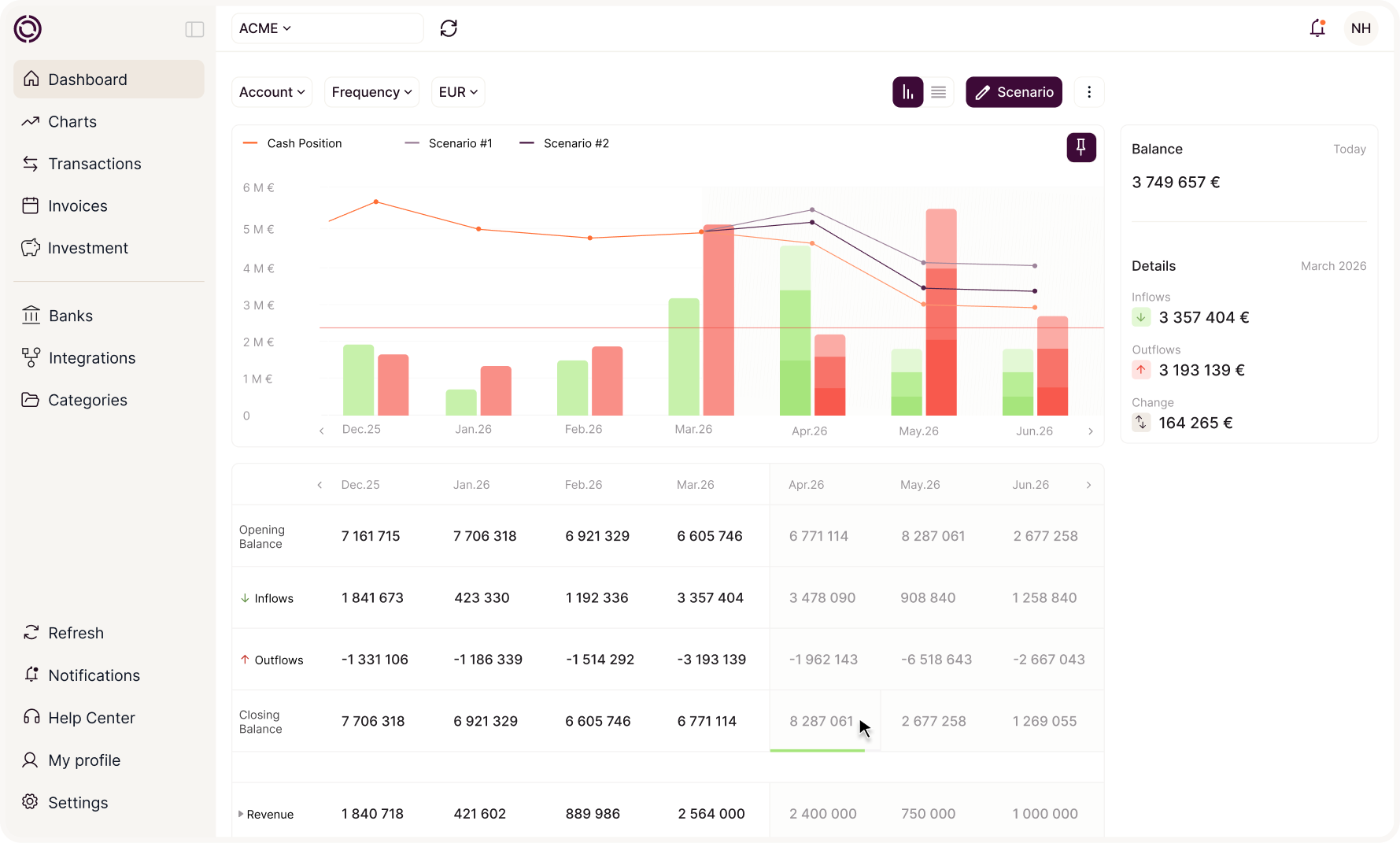
Okimia helps retail businesses centralize their omnichannel flows, anticipate inventory-related cash needs, and manage their financial performance in real time, despite the sector's volatility.












The specific cash flow challenges retail businesses face
Why is cash management particularly difficult for a retail business? We've identified 3 major challenges.

Extremely fast inventory turnover
The retail sector is defined by particularly dynamic and complex inventory turnover, requiring constant, substantial financial investment.
Every new collection, every season, requires fast restocking that immediately ties up cash, sometimes with critical gaps between when products are purchased and when they're actually sold.
This pressure is amplified further by the variety of distribution channels — physical stores, marketplaces, e-commerce — which multiply financing needs and inventory locations.

Extreme seasonality
Retail businesses face extremely pronounced seasonality, with periods of high activity (sales, year-end holidays) alternating with much quieter periods.
These sharp swings create major cash flow pressure, forcing businesses to build substantial financial reserves to absorb slow periods while financing the inventory needed for peak activity.
The ability to smooth out these fluctuations becomes a matter of strategic survival.

Structurally thin margins
The retail sector is defined by particularly compressed margins, generally between 2% and 5%, leaving little financial room to maneuver.
This tightness demands extremely precise, dynamic cash management, where even a small gap can quickly become critical.
Constant competitive pressure, the need to offer attractive prices, and complex logistics costs further compound this inherent financial fragility, making cash management both crucial and highly sensitive.
How to properly manage cash flow for a retail business
A few days is all it takes to automate your cash management
01.
02.
03.
Master the seasonality of financial flows
Cash management in retail requires a deep understanding of the seasonal cycles that define this sector. Every period of the year brings unique financial dynamics, with periods of high activity like summer and winter sales, year-end holidays, or quieter moments. This variability calls for a proactive approach to inventory management, supply chains, and financial resources. High-performing businesses anticipate these fluctuations by building reserves during strong periods, adjusting their purchasing policy, and diversifying their revenue sources to smooth out cash flow swings.
Optimize inventory and receivables turnover
Financial performance in retail depends largely on the ability to manage inventory and receivables effectively. An optimization strategy involves reducing storage times, negotiating better purchasing terms with suppliers, and setting up precise tracking mechanisms for outstanding balances. This requires ongoing analysis of the most profitable products, quick adaptation to consumer trends, and a smart approach to clearing excess stock. At the same time, managing accounts receivable needs to be rigorous, with effective follow-up processes and clearly defined payment terms to minimize delays and improve liquidity.
Develop a multi-channel view of financial flows
Modern retail is defined by its omnichannel nature, blending physical and digital sales. This complexity calls for a comprehensive, integrated approach to financial management. Businesses need to develop the ability to consolidate flows coming from different points of sale, marketplaces, and distribution channels. This means setting up tracking and reporting systems capable of instantly collecting and analyzing financial data, regardless of its source. This approach makes it possible to understand exactly how profitable each channel is, identify performance levers, and strategically adjust investments and resources.

Ready to optimize your cash flow?
Discover how Okimia can transform your financial management starting today.
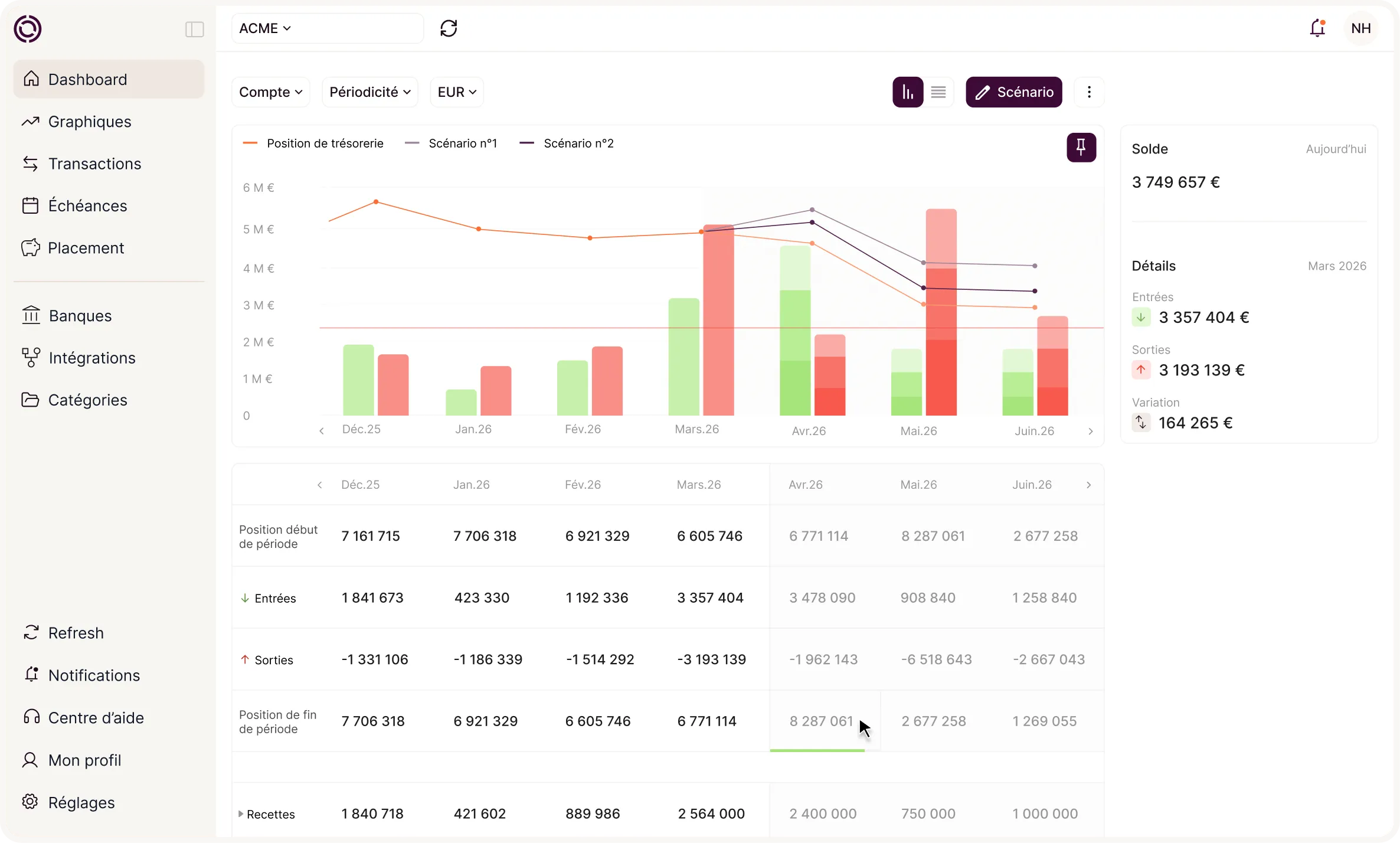
Why use Okimia for a retail business?
The key to effective cash management in retail: equip yourself with dedicated software like Okimia. Okimia already supports many retail businesses in their day-to-day cash management. Find out below how a solution like Okimia can help you better anticipate, manage, and optimize your cash flow.
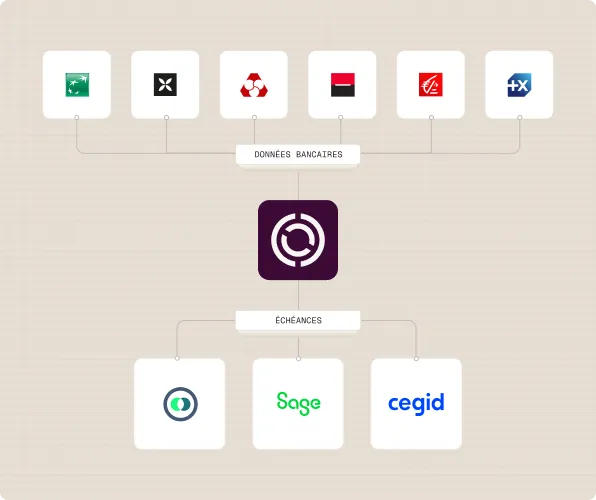
Omnichannel financial flow synchronization
Consolidate revenue from multiple points of sale and instantly categorize your sales transactions
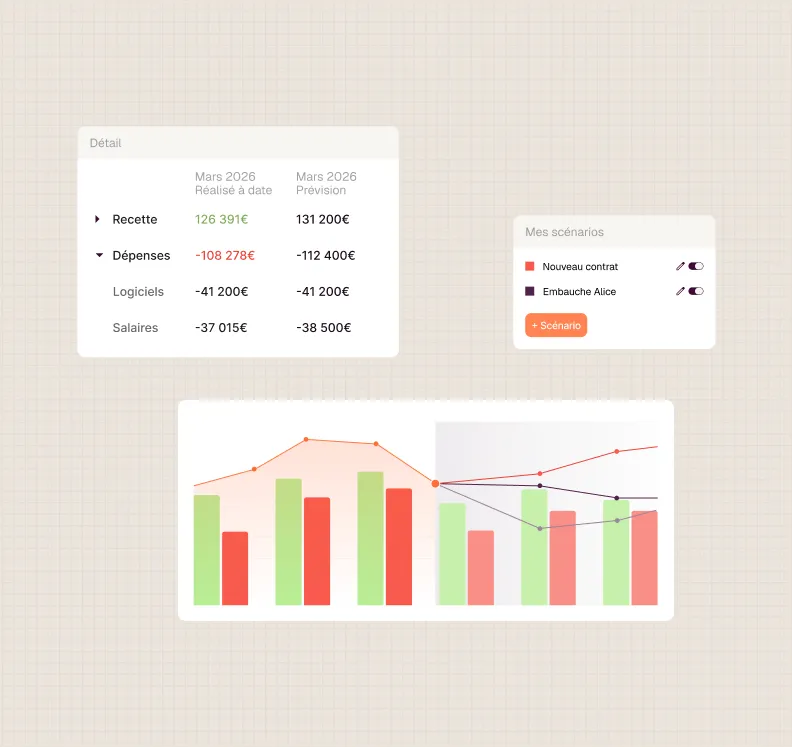
Predictive financial strategy
Precisely anticipate your cash needs based on retail sales cycles
Real-time operational management
Turn your financial data into a performance lever
They chose Okimia
Here's what some of our clients say after choosing Okimia to visualize their financial data:

A huge thank you to Julie from OKIMIA for her patience during our exchanges on how to use the tool! We are very well supported, thank you!

Sochanda Pich

No entrepreneur likes tracking their cash flow. And yet, it's the #1 cause of startup failure. I tried everything on my own without success. Until I discovered Okimia. Finally a simple and intuitive tool. That I actually enjoy using. Okimia lets me: - Track my cash position in real time - Build my custom financial forecast - Compare actuals vs. forecasts - Automatically estimate VAT - Run scenarios. No more bad surprises. I've gained peace of mind and KOKO Kombucha is all the better for it.

Laura Chetail
This is THE essential solution for cash management and forecasting! Julie and Dia are always available with incredible responsiveness! Kudos to the whole team!

Stéphane Calleja


We're here to help

Have more questions?
Don't hesitate to contact our teams.
How do I know if my retail company needs cash management software?
Your retail company needs such software if you face: difficulties forecasting your cash flow during seasonal periods, significant time spent on Excel spreadsheets, lack of visibility on margins by product, challenges in managing multi-store stocks, or significant business growth. This is particularly relevant if your annual revenue exceeds €500K.
Who are Okimia's competitors and which should I choose in retail?
Okimia's main competitor is Agicap. Although Agicap is recognised, it is generally more expensive and less suited to retail specifics. Okimia offers more targeted features for distribution companies, particularly for structures of 5 to 200 employees with multi-channel activity.
How much does cash management software cost for a retail company?
At Okimia, prices start at €69 per entity and connected bank account. Pricing is designed to adapt to retail specifics, with the ability to track multiple points of sale and distribution channels. Okimia positions itself as a competitive solution offering excellent value for money.
How long does it take to implement cash management software for a retail company?
Implementation varies depending on the complexity of your distribution network, from a few hours to a few weeks. Timing depends on the number of points of sale, till systems to integrate, and the diversity of your sales channels. Okimia enables rapid implementation while adapting to the complexity of your retail organisation.
What are the advantages of cash management software over Excel for a retail company?
A cash management tool offers complete automation of retail-specific processes, significantly reducing human errors. Unlike Excel, it enables real-time synchronisation of data from different physical and online points of sale, automated dashboards by product or store, and simplified collaboration between teams. Stock forecasts, margin analyses, and seasonal campaign management are greatly facilitated.
How do I choose cash management software for a retail company?
To choose the right cash management software, start by identifying your specific retail needs: multi-channel transaction volume, stock management, sales seasonality. Prioritise software with an intuitive interface and features adapted to distribution, such as margin tracking by product and point of sale. Check compatibility with your till and e-commerce systems. Okimia can be a relevant solution if you're looking for a consolidated view of your retail activity.
How do I build reliable cash flow forecasts for a retail company?
For reliable forecasts in retail, collect precise historical data covering at least 12 months, taking into account the strong seasonality of the sector. Analyse your sales cycles, promotional periods, and supplier payment delays. Factor in all recurring costs (rents, stock, staff) and predictable income from sales. Use differentiated scenarios per sales channel and update your forecasts regularly based on actual performance.
Request a demo
30 minutes with a specialist who will set up Okimia for your business. They will answer all your questions and show you the product in real-world conditions.
Free trial
Create your account and connect your banks in 5 minutes. 7 days free to explore Okimia at your own pace, no commitment.