How to optimize cash management for a SaaS company?
SaaS (Software as a Service) companies have specific characteristics that create specific financial challenges. In this article, let's look at how cash management software like Okimia can help.

SaaS: the essentials on cash management
Cash management is a vital strategic issue for SaaS companies, whose business model relies on recurring revenue but heavy, ongoing investment. The pressure comes from a structural imbalance between acquisition, retention, and investment cycles:
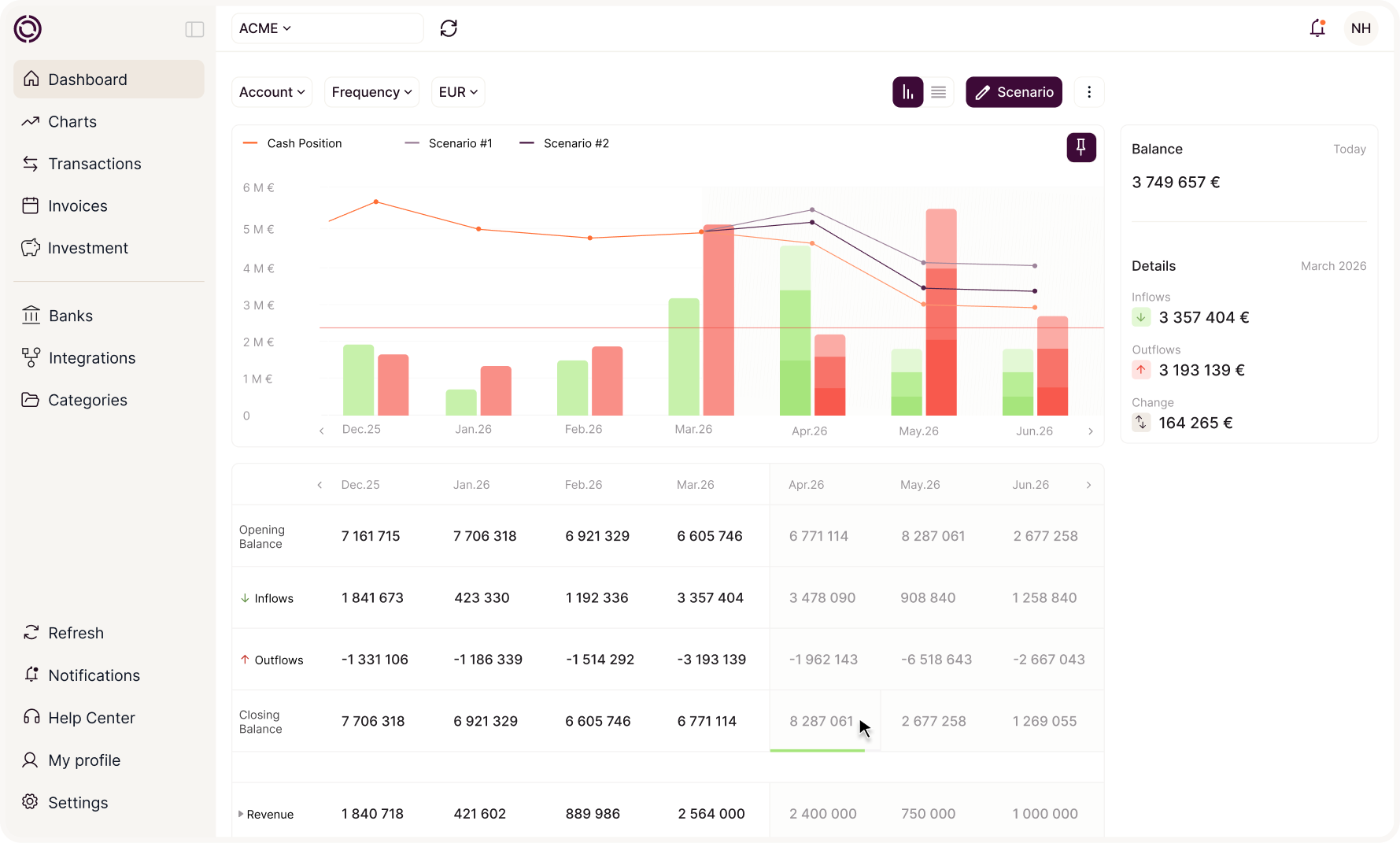
Okimia helps SaaS companies secure their financial trajectory, connecting recurring revenue, growth assumptions, and cash flow projections.










The specific cash flow challenges SaaS companies face
Why is cash management particularly difficult for a SaaS company? We've identified 3 major challenges.

The subscription model
The SaaS model relies on recurring monthly revenue that, while seemingly predictable, hides significant financial complexity.
Unlike traditional one-time sales models, SaaS companies have to continuously invest heavily in customer acquisition and technology development before they can recoup those costs.
The ratio of upfront investment to future revenue creates constant pressure on cash flow, where every new subscription represents a long-term bet.

Churn volatility
Churn is a major financial risk for SaaS companies, as it constantly calls into question the stability of recurring revenue.
Every lost customer represents not only an immediate drop in revenue, but also the loss of the initial investment made to acquire them.
This ongoing uncertainty considerably complicates financial projections and cash flow forecasting, forcing companies to maintain a substantial financial reserve to absorb these fluctuations.

Intensive investment cycles and competition
The SaaS sector is defined by extremely dynamic competition, where technological innovation and rapid growth are essential for survival.
Companies have to continuously reinvest a significant share of their revenue in R&D, marketing, and business expansion, creating an almost continuous investment cycle.
This constant need for growth generates substantial, volatile financing needs.
How to properly manage cash flow at a SaaS company?
01.
02.
03.
Precisely manage MRR and recurring revenue
Cash management at a SaaS company relies above all on a precise, up-to-date understanding of MRR (Monthly Recurring Revenue) and its components: new subscriptions, upsells, downgrades, and cancellations. It becomes essential to break this recurring revenue down by customer cohort, pricing tier, and acquisition channel, in order to identify the most profitable and stable segments. This level of detail allows for reliable projections of future cash receipts, while anticipating seasonality effects specific to certain customer segments. Rigorously tracking net MRR (after churn and downgrades) provides a far more realistic view of the financial trajectory than billed revenue alone.
Anticipate the impact of churn on cash flow
Churn isn't just a sales metric — it's a direct financial risk factor that needs to be built into every cash flow forecast. It's crucial to model several churn scenarios (optimistic, realistic, pessimistic) and measure their impact on MRR over 6, 12, and 24 months. This approach also makes it possible to calculate a reliable LTV (lifetime value) and compare it to CAC (customer acquisition cost), to ensure every euro invested in acquisition remains profitable over time. Anticipating these variations ahead of time allows marketing spend and hiring to be adjusted before cash flow comes under pressure.
Master burn rate and secure your runway
For a growing SaaS company, burn rate (the pace at which cash is being consumed) is the most closely watched indicator, particularly by investors. Sound management means precisely calculating runway (the number of months of cash remaining at the current spending rate) and updating it regularly based on growth, churn, and investment assumptions. This visibility helps trigger a fundraising round at the right time — not too early (unnecessary dilution), not too late (negotiating from a position of weakness). Building several spending scenarios (hiring, marketing, R&D) helps identify the levers available to extend runway if needed.

Ready to optimize your cash flow?
Discover how Okimia can transform your financial management starting today.
Why use Okimia for a SaaS company?
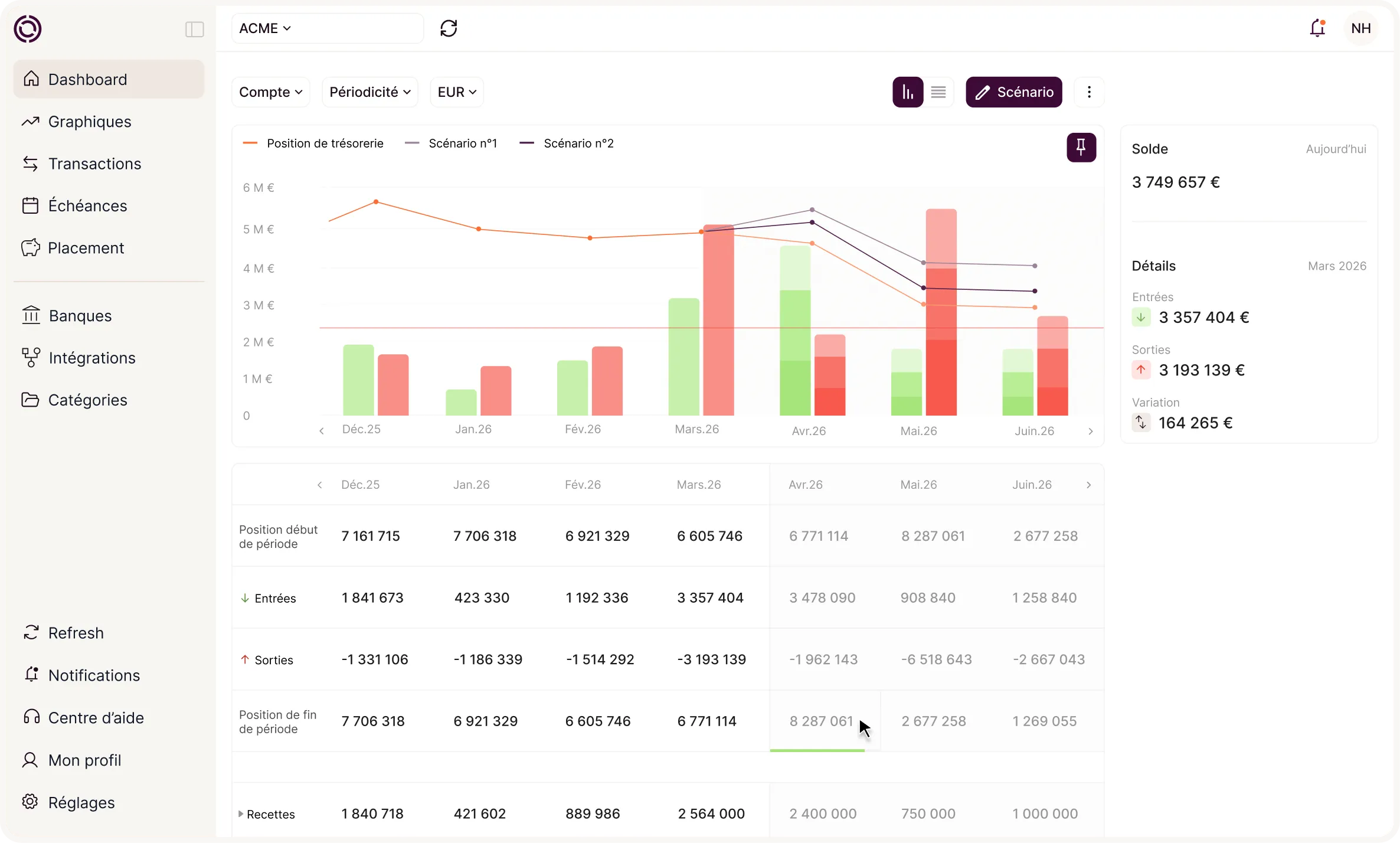
The solution for precisely managing your SaaS company's cash flow: choose cash management software like Okimia. Okimia already supports many SaaS companies and is well versed in addressing this market's specific challenges: MRR tracking, anticipating churn, and projecting runway.
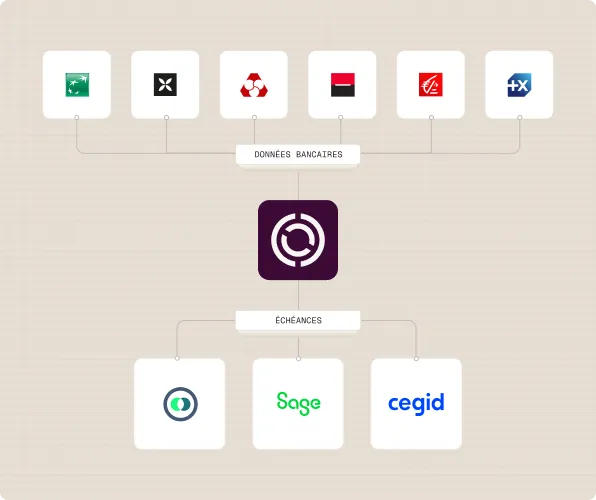
Automatic bank synchronization
Track your recurring subscription revenue and optimize your financial visibility in real time
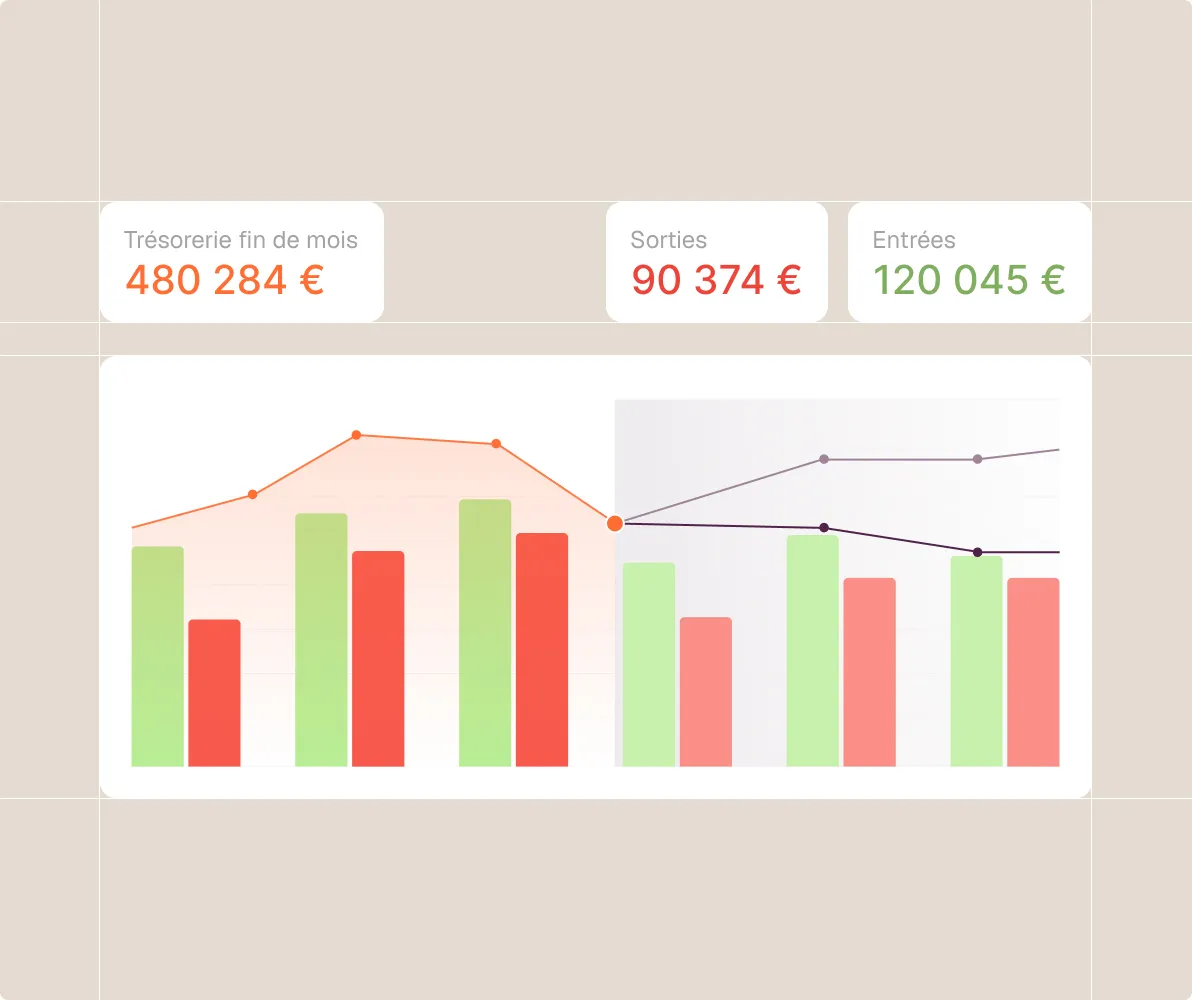
Cash flow forecasting
Simulate your financial trajectory and precisely anticipate your financing needs
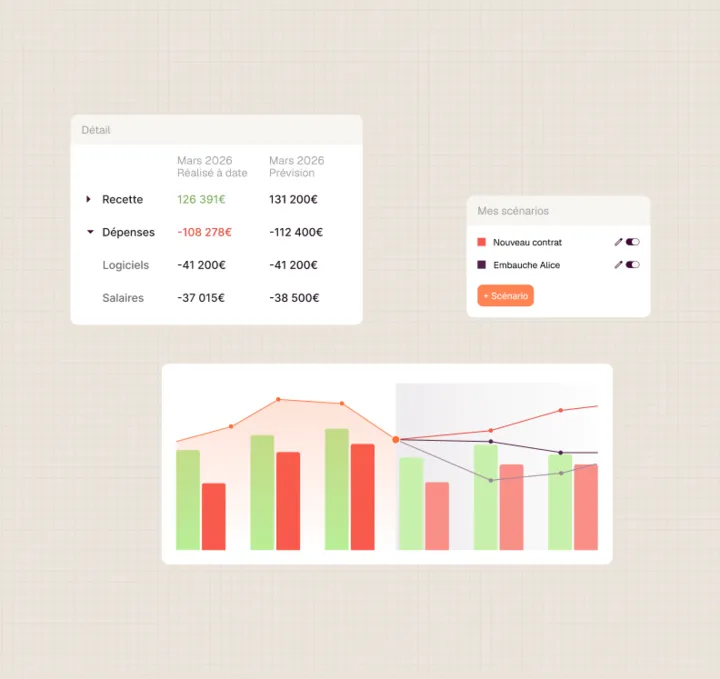
Forecast-vs-actual comparative analysis
Align your financial strategy in real time through precise tracking
They chose Okimia
Here's what some of our clients say after choosing Okimia to visualize their financial data:

Very useful for us on a daily basis: we track all our categorized cash flows in real time! And we automate various financial operations.

Thomas Reynaud

The tool is easy to use at a competitive price. It enables optimal cash management without getting into accounting details. Support is very effective (which is a key point)!

Shams Fantar
Excellent software, very practical for getting real-time data effortlessly. Simple to set up.

Sylvain Forte


We're here to help

Have more questions?
Don't hesitate to contact our teams.
How do I know if my SaaS company needs cash management software?
Your SaaS company needs such a tool if you face: difficulties projecting your financial runway, significant time spent on Excel spreadsheets, lack of visibility on your growth metrics, challenges tracking multi-product or multi-country activity. This is particularly relevant if your MRR exceeds €50K per month or if you are preparing a fundraise.
Who are Okimia's competitors in the SaaS sector and which should I choose?
Okimia's main competitor is Agicap, which is recognised but often perceived as very complex and significantly less affordable.
How much does cash management software cost for a SaaS company?
At Okimia, pricing is adapted to the reality of technology startups, with plans starting at €69 per entity. Pricing takes into account the specifics of SaaS models: multi-product tracking, subscription management, runway projection. Okimia is positioned as a financially accessible solution offering advanced features for technology companies.
How long does it take to implement cash management software for a SaaS startup?
Implementation time varies depending on the complexity of your tech organisation. For a young SaaS startup, deployment can take from a few hours to a few weeks. Speed depends on the number of bank accounts, tools to integrate (CRM, billing), and the structure of your subscriptions. Okimia offers rapid implementation, adapted to the constraints of technology companies, with personalised support.
What are the advantages of cash management software over Excel for a SaaS company?
A cash management tool offers complete automation of SaaS financial processes, significantly reducing forecasting errors. Unlike Excel, it enables real-time tracking of key metrics such as cash flows from operations, financing, and investment. Dashboards are dynamic, billing tool integrations are automatic, and bank synchronisation is instant. The ability to simulate growth scenarios becomes a real strategic asset.
How do I choose a cash management software for a SaaS company?
To choose the right cash management software for a SaaS business, start by analysing your specific needs: subscription transaction volume, number of products, integrations with your CRM and billing tools. Okimia can be a relevant solution for technology startups and scale-ups.
How do I build reliable cash flow forecasts for a SaaS company?
To build reliable forecasts in the SaaS sector, gather precise historical data on your recurring revenue. Analyse your churn rate, expansion revenue, and acquisition costs carefully. Factor in all recurring costs: cloud infrastructure, developer salaries, marketing costs. Build differentiated scenarios based on growth and churn assumptions. Use advanced projection methods that account for the specific dynamics of technology companies.
Request a demo
30 minutes with a specialist who will set up Okimia for your business. They will answer all your questions and show you the product in real-world conditions.
Free trial
Create your account and connect your banks in 5 minutes. 7 days free to explore Okimia at your own pace, no commitment.